China Top 10 Steel Plant Crane Manufacturers
Choosing a supplier for a steel plant crane is a practical decision with long-term consequences. Steelworks rely on cranes to move hot metal, billets, coils, scrap, and heavy equipment through demanding production areas. Each lift must fit the load, travel path, operating cycle, and site conditions. A missed detail can mean slower handling or costly downtime. Details matter.
This guide introduces ten steel crane manufacturers in China and outlines factors buyers can use to assess them. The comparison focuses on product range, lifting capacity, duty requirements, control systems, safety features, customization, and after-sales support. These are useful starting points, not guarantees of performance. A catalog may list impressive specifications, but actual suitability depends on engineering documents, component quality, installation conditions, and maintenance planning. Ask for evidence that matches your application.
Steel plants differ. A crane serving a casting bay faces different heat, dust, and operating demands from one handling finished coils in a warehouse. Buyers should confirm working-class ratings, braking arrangements, operator visibility, and protection for electrical components. They should also clarify commissioning support, spare-parts access, and response times before placing an order. This list is a guide, not a substitute for technical review. Rankings can vary with project needs, and published information may not capture every site’s experience. Use the profiles to build a shortlist, then compare proposals against your operating conditions and independent references.
Steel Plant Crane Types: Ladle, Charging, and Overhead Cranes
China Top 10 Steel Plant Crane Manufacturers
Steel Plant Crane Types: Ladle, Charging, and Overhead Cranes
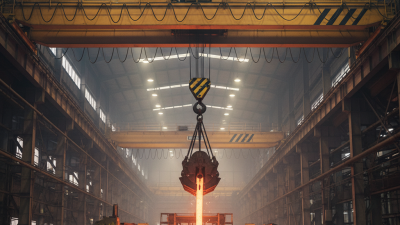
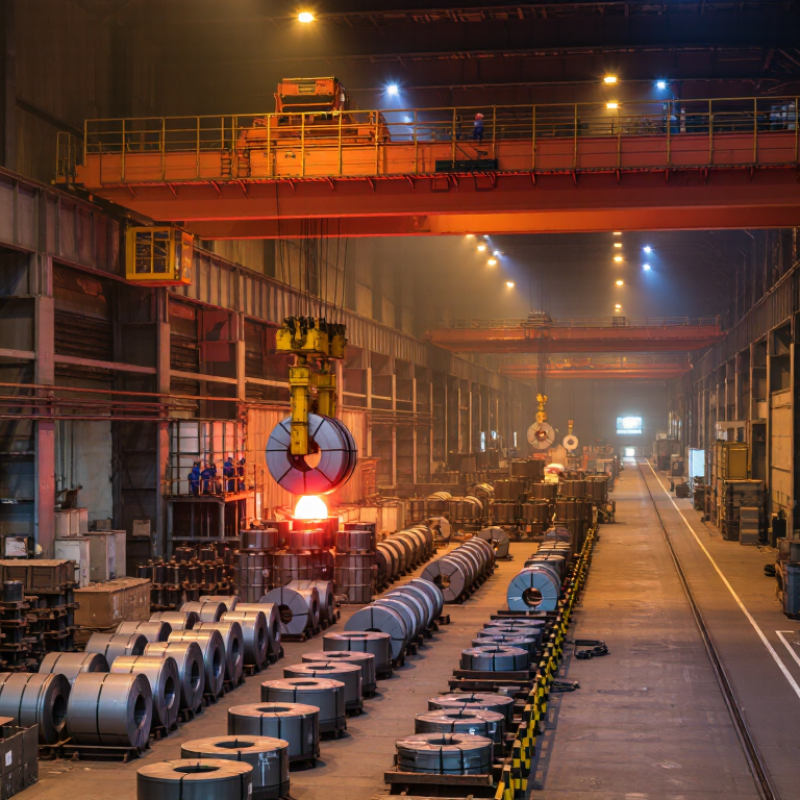
Steel plants rely on cranes built for intense heat, heavy loads, and repeated duty cycles. Ladle cranes lift molten steel between furnaces and casting areas. Their hoists, hooks, and braking systems must suit the ladle’s rated load and the plant’s operating conditions. Heat matters. Operators also need clear visibility and precise control, especially when positioning a full ladle above a casting line.
Charging cranes move scrap, bundles, or other furnace materials into charging areas. Their attachments and reach should match the furnace layout and the size of each load. General overhead cranes handle many supporting tasks, from moving maintenance equipment to transporting finished products. Selecting a crane by lifting capacity alone is a common planning blind spot. Span, lift height, travel speed, temperature exposure, and maintenance access all affect dependable performance. Not every plant needs the same configuration.
Tips: Check duty classification, runway condition, and control options against actual shift patterns. Confirm how components will be inspected and serviced in the available space. Leave room for operator training, too. Specifications can look complete on paper, yet small layout details are easy to miss before installation.
Key Design Standards: GB/T 3811 and ISO 4301-1 Classes A1–A8
For a steel-plant crane, GB/T 3811 sets out design principles for loads, strength, stability, and components. It helps engineers assess more than rated lifting capacity. A crane lifting 20 tonnes occasionally faces different fatigue demands from one cycling all shift. ISO 4301-1 complements this assessment by classifying crane duty through utilization and load spectrum. Its A1–A8 groups help describe expected service intensity. Higher classes generally indicate more demanding duty, but the selected class must match real operating records.
Look beyond the nameplate. Ask how many lifts occur per hour, how often the crane handles near-capacity loads, and whether heat, dust, or impact affects the runway. These details influence girder fatigue checks, wheel sizing, brakes, and mechanisms. A tidy class label is not enough. Request design calculations, duty assumptions, inspection access details, and evidence that the proposed configuration follows applicable standards. Compare assumptions carefully; two suppliers may use the same class but different operating profiles. That gap is easy to miss. In practice, production data is imperfect, and future loads may change. Revisit the classification when the process or shift pattern changes, rather than treating the original selection as permanent.
China’s Top 10 Steel Plant Crane Manufacturers and Product Specialties
China’s Top 10 Steel Plant Crane Manufacturers and Product Specialties
China’s steel-plant crane suppliers are best compared by duty, not catalog size. Ladle cranes move molten steel in foundries. Charging cranes feed furnaces with scrap or hot metal. Scrap-yard magnet cranes handle loose steel, while grab cranes move bulk materials. Casting cranes support continuous-casting lines. Slab and billet cranes transfer hot semi-finished steel. Coil cranes use C-hooks or lifting beams. Maintenance cranes serve mill bays and repair areas. Automated storage cranes manage finished products. Special-purpose overhead cranes can be configured for harsh, dusty workshops. Heat matters.
World Steel Association’s World Steel in Figures 2025 reports that China produced 1,005.1 million tonnes of crude steel in 2024, out of 1,882.6 million tonnes worldwide. That scale makes reliable lifting equipment essential, but output figures do not prove a crane’s quality. Buyers should check rated capacity, duty class, braking performance, heat shielding, and access for maintenance. Ask how the crane behaves during repeated lifts, not only during a factory demonstration. A polished specification sheet is useful, but it is not enough. Control options and automation vary widely, and the best fit depends on the plant layout, load cycle, and material temperature. A detail often missed: service access can matter as much as lifting speed.
China Top 10 Steel Plant Crane Manufacturers - China’s Top 10 Steel Plant Crane Manufacturers and Product Specialties
This overview summarizes ten common steel-plant crane specialties. Company names are omitted; the entries are product categories, not a verified ranking of manufacturers. Capacity ranges are indicative only and vary by design, operating conditions, and applicable standards.
Manufacturer Comparison: Rated Load, Span, Lift Height, and Duty Class
China’s steel sector makes crane selection a practical production issue, not just a purchasing exercise. World Steel Association’s World Steel in Figures 2024 reports that China produced 1,019.1 million tonnes of crude steel in 2023. For a plant comparison, rated load is a useful starting point, but it does not describe the whole job. A 50-tonne ladle crane and a 50-tonne maintenance crane may face very different operating cycles.
Span must match the runway and building layout. Measure rail-center distance, then check the supplier’s load chart and structural calculations; a wider span can affect bridge deflection and runway loads. Lift height means usable hook travel, not merely the distance between floor and roof. Check hook approach at both ends, especially near columns, furnace platforms, and maintenance bays. Small clearances matter.
Duty class deserves equal weight. ISO 4301-1 classifies cranes using load spectrum and operating time, rather than rated load alone. Compare the proposed class with actual starts per hour, loaded lifts, and shifts per day. Ask for the assumptions behind the classification. A brochure may look precise. The real cycle is often messier, and buyers should verify it against plant records before comparing bids.
Selection Criteria: Safety Systems, Service Life, and Steel-Mill Conditions
Selecting among the China top 10 steel plant crane manufacturers requires more than comparing lifting capacity. Safety systems must match real hazards: hot scale, suspended ladles, restricted sightlines, and overlapping crane paths. Look for tested overload protection, fail-safe brakes, anti-collision controls, clear operator warnings, and accessible emergency stops. World Steel Association’s World Steel in Figures 2024 reports roughly 1.89 billion tonnes of crude steel production worldwide in 2023. That scale signals demanding, high-throughput operations, but it does not make every mill identical. A site walk-through matters. Small details count.
Service life should be judged against duty, not brochure claims. ISO 4301-1 classifies cranes by operating cycles and load spectrum; ISO 12482 provides a basis for monitoring the design working period. Ask manufacturers to document the assumed duty class, inspection plan, critical-part replacement intervals, and maintenance access. In a steel mill, radiant heat, dust, vibration, and frequent starts can shorten component life. Compare those conditions with the proposed motor, brakes, ropes, electrical protection, and cooling arrangements. A long nominal lifespan is not proof of reliable service. I would be cautious here. Real maintenance records and mill-specific references can reveal gaps that a polished specification sheet misses.
China Top 10 Steel Plant Crane Manufacturers — Selection Criteria: Safety Systems, Service Life, and Steel-Mill Conditions
This checklist framework covers five safety checks (overload protection, limit switches, emergency stop, fail-safe braking, and anti-collision measures), four service-life checks (duty rating, structural fatigue resistance, wear components, and maintenance support), and five steel-mill condition checks (heat protection, dust ingress, vibration and shock, corrosion exposure, and ambient temperature). Counts represent checklist items—not manufacturer ratings or market statistics.