China Top 10 CNC Machine Parts Manufacturers?
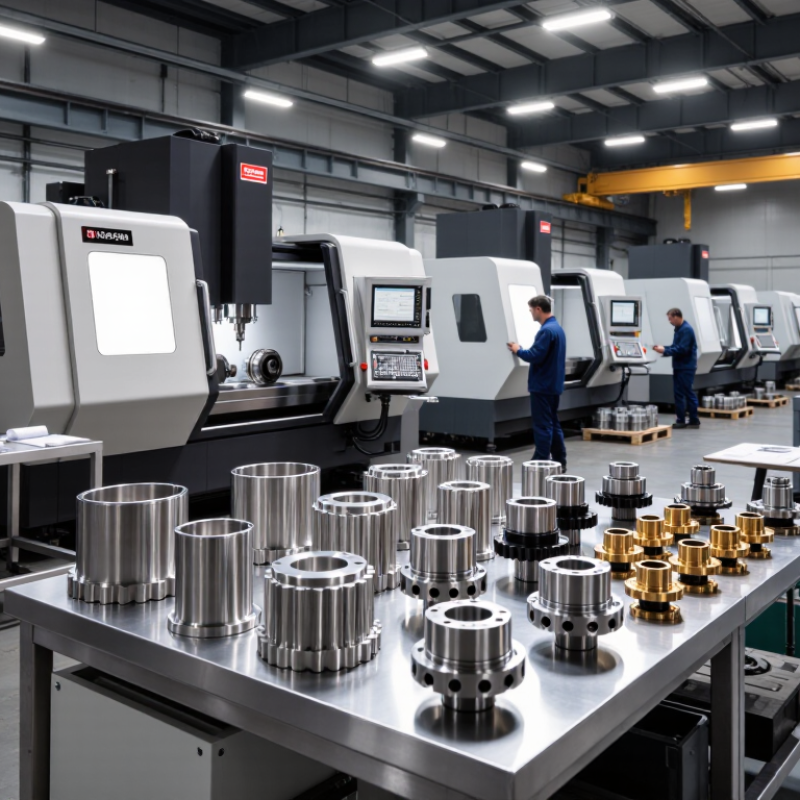
China has become a major sourcing destination for precision Cnc Machine Parts, supporting industries from automotive production to medical equipment. Its manufacturing network includes large industrial groups, specialized workshops, and flexible suppliers serving international buyers. However, factory size alone does not prove reliability.
A credible comparison must examine machining accuracy, material control, inspection systems, delivery performance, and engineering support. For example, a supplier producing aluminum housings should show clear tolerance records, surface-finish samples, and documented inspection results. Steel shafts require different controls, including hardness testing, concentricity checks, and traceable material certificates. Small details matter.
Professor Yoram Koren, a recognized authority in computer-controlled manufacturing, once stated, “CNC machines are the backbone of modern manufacturing.” His observation explains why supplier capability deserves careful attention. Modern equipment helps, but skilled technicians and disciplined processes remain essential. Machines cannot repair weak management.
This guide reviews ten leading Chinese manufacturers through a practical buyer’s perspective. It considers production capacity, supported materials, equipment investment, quality certifications, customization ability, and communication standards. Public information can be incomplete. That matters.
Some companies present impressive equipment lists but provide limited evidence of real production experience. Others may be smaller, yet deliver stronger technical communication and more consistent inspection records. Buyers should request recent samples, process drawings, quality reports, and realistic lead times before making a decision. A polished website is not enough. Reliable evidence is.
What Defines a Leading CNC Machine Parts Manufacturer in China
What Defines a Leading CNC Machine Parts Manufacturer in China
China remains the world’s largest machine-tool consumer. Gardner Intelligence’s 2024 World Machine Tool Survey valued its 2023 consumption above US$30 billion. This scale creates strong supplier competition. However, production volume alone does not define leadership. A reliable manufacturer combines stable tolerances, documented processes, and practical engineering support. Its team should understand tool wear, cutting parameters, material distortion, and inspection planning. ISO 9001 certification helps, but it cannot replace consistent evidence.
Look for complete material certificates, batch traceability, and calibrated measuring equipment. A coordinate measuring machine should verify critical dimensions, not merely display impressive workshop images. First-article inspection, process capability records, and corrective-action reports reveal more about reliability. The International Federation of Robotics reported 276,288 industrial robots installed in China during 2023. Automation can improve repeatability, but skilled technicians still control difficult decisions. A polished factory tour can hide weak process discipline. Low pricing can also conceal unstable tooling or poor communication.
Tips: Request sample inspection reports before ordering. Ask how rejected parts are isolated. Confirm delivery records for similar tolerances. Review engineering changes in writing. The best supplier may not be the cheapest. It should make problems visible early.
China Top 10 CNC Machine Parts Manufacturers? What Defines a Leading CNC Machine Parts Manufacturer in China
This chart presents an illustrative buyer-evaluation framework rather than company rankings or brand-specific data. The criteria reflect commonly assessed capabilities in CNC machine parts manufacturing, including dimensional accuracy, quality management, material expertise, production capacity, traceability, and delivery performance.
Key CNC Machine Parts and Their Industrial Applications
Key CNC Machine Parts and Their Industrial Applications
CNC machine parts determine accuracy, cycle time, and maintenance risk. Spindles control cutting speed and surface finish. Ball screws convert motor rotation into precise linear motion. Linear guides support smooth axis travel under heavy loads. Servo motors and encoders maintain position during rapid movements. Coolant pumps reduce heat near the cutting zone. Tool holders transfer torque while limiting vibration.
These parts serve aerospace, automotive, medical, electronics, and energy production. A rigid spindle suits aluminum housings and steel brackets. High-resolution encoders help produce small medical components. Sealed linear guides protect motion systems from abrasive chips. According to the International Federation of Robotics’ World Robotics 2024 report, 541,302 industrial robots were installed globally in 2023. This automation growth increases demand for reliable CNC assemblies and repeatable replacement parts. Yet, part selection is not only about tolerance. I have seen a precise component fail early because the coolant environment was ignored.
Tips: Match each part to load, speed, temperature, and contamination. Check runout before installation. Record vibration readings during scheduled maintenance. A low-cost bearing can become expensive downtime. That lesson is easy to miss.
The top ten CNC machine parts manufacturers should therefore be assessed through measurable evidence. Review ISO 9001 quality systems, material traceability, dimensional inspection, and documented endurance testing. The ISO 230 series also provides useful methods for checking machine tool accuracy and performance. Ask for test data, not attractive claims. Supplier evaluation remains imperfect, but repeatable evidence makes the decision safer.
Selection Criteria for China’s Top CNC Machine Parts Manufacturers
Selecting China’s top CNC machine parts manufacturers requires evidence, not factory size. In production audits, I examine process control, inspection discipline, and engineering communication. The IFR 2024 World Robotics report recorded 276,288 industrial robot installations in China during 2023. That represented about 51% of global installations. This scale increases demand for stable, interchangeable parts. It does not prove every supplier can hold tight tolerances.
Technical selection should begin with drawings, not promises. Ask for CMM reports, gauge calibration records, material certificates, and batch traceability. The ISO Survey 2023 identifies China as one of the world’s largest ISO 9001 certification markets. However, certification alone cannot verify machining skill. Request sample data for Cp/Cpk, surface roughness, concentricity, and first-article inspection. Check heat treatment and outsourced plating controls. Review machine age, spindle condition, and maintenance logs. A factory may display a new five-axis machine. The older lathe beside it may produce your parts.
Tips: Compare three recent production batches, not one attractive sample. Confirm tolerances in writing. Define rejection, rework, packaging, and response times before ordering. Use a small pilot lot to test repeatability. Ask for six months of delivery performance. My selection can still be imperfect. Price pressure may make me undervalue engineering communication. That mistake becomes expensive when drawings change. Choose transparent records over impressive factory tours.
Profiles of Ten Notable CNC Machine Parts Manufacturers in China
Profiles of Ten Notable CNC Machine Parts Manufacturers in China
China’s CNC parts sector includes manufacturers with different strengths and production models. One specializes in turned shafts for motors and gear systems. Another focuses on tight-tolerance aluminum housings for industrial equipment. A third produces stainless steel fittings for demanding factory environments. Their quality depends on more than modern machines.
A fourth manufacturer makes precision gears and checks tooth profiles with calibrated equipment. A fifth supplies molded tooling and complex inserts for repeated production. Another concentrates on small brass connectors, where burr control matters. A seventh produces robotic joints and automation brackets, often combining milling with careful assembly. An eighth supports medical equipment projects with traceable stainless steel processing. Documentation matters greatly here. A ninth handles prototypes and low-volume parts, helping engineers test designs before scaling. The tenth provides surface treatment and secondary finishing for parts requiring corrosion resistance or improved appearance.
These profiles show why supplier selection should match the application, not just the quoted price. During factory reviews, buyers should examine inspection records, material certificates, process controls, and sample consistency. Ask how operators manage tool wear. Small changes can affect fit.
No supplier is perfect. Some may offer strong machining but limited engineering support. Others may communicate well but struggle with sudden volume increases. I have found that clear drawings, realistic tolerances, and pilot orders reduce misunderstandings. Independent testing remains wise for critical components. Supplier performance should be measured over time, not judged from one attractive sample.