How to Choose the Right Steel Plant Crane for Your Needs?
Choosing the right steel plant crane can be a daunting task. With various options available, it’s crucial to assess your specific needs. A steel plant crane must suit your operational demands and environment. You might think about load capacity, lifting height, and travel distance.
Different types have unique features. Some cranes are electric, while others are hydraulic. Understanding the applications of each type is essential. Consider how frequently you plan to use the crane. Frequent operation may require a more robust model.
Don’t overlook the legal and safety regulations that affect your choice. Each region may have different compliance standards. Reflect on the training needed for your team. A mismatched crane could lead to inefficiencies. Your choice should enhance productivity, not hinder it.
Identify Your Lifting Requirements and Load Capacities
Choosing the right crane for a steel plant involves understanding your specific lifting needs. Start by identifying what types of materials you will lift. Different materials have different weight distributions. A proper assessment ensures you secure appropriate lifting equipment.
Next, evaluate load capacities. This includes maximum weight and dimensions of the loads. Heavy items require cranes with higher load limits. Take note of the space available for crane operations. Tight spaces might limit your options.
Consider various factors that influence your choice. Do you need frequent lifts or heavy loads? Reflect on your workflow. A crane that meets your needs today might not work tomorrow. Always plan for future needs. This foresight can save time and cost.
Steel Plant Crane Load Capacities
Understand Different Types of Steel Plant Cranes Available
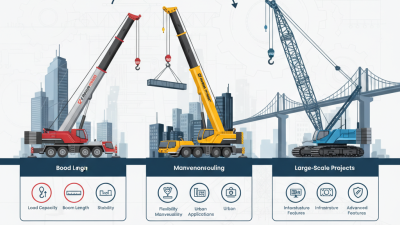
When selecting a steel plant crane, understanding the types available is crucial. There are overhead cranes, gantry cranes, and jib cranes. Overhead cranes, often used for heavy loads, travel along a rail system, making them versatile for large spaces. Gantry cranes operate on a similar principle but are more mobile, as they can be placed anywhere on the ground. Jib cranes, on the other hand, are great for lifting items in smaller areas. These cranes each serve different needs based on the layout and machinery of your facility.
Consider the weight capacity of each type. Overhead cranes typically handle the heaviest loads, while jib cranes are suitable for lighter tasks. An organization must also think about the space available. The ceiling height can limit overhead crane usage. A gantry crane could be a more fitting alternative if overhead rail isn’t feasible. Reflecting on these aspects can help streamline operations significantly. Not making an informed choice may lead to operational inefficiencies. Misjudging your lifting requirements can result in unnecessary expenses or even safety issues. Each crane’s unique features demand careful consideration to cater to specific operational needs.
How to Choose the Right Steel Plant Crane for Your Needs?
| Crane Type |
Load Capacity |
Span Length |
Height of Lift |
Usage |
| Overhead Crane |
1 - 100 tons |
10 - 50 m |
2 - 30 m |
General Material Handling |
| Bridge Crane |
5 - 200 tons |
15 - 45 m |
3 - 20 m |
Heavy Duty Applications |
| Jib Crane |
0.5 - 15 tons |
3 - 7 m |
2 - 5 m |
Assembly and Maintenance |
| Gantry Crane |
2 - 100 tons |
5 - 40 m |
3 - 20 m |
Outdoor Material Handling |
Evaluate Crane Features and Technologies for Efficiency
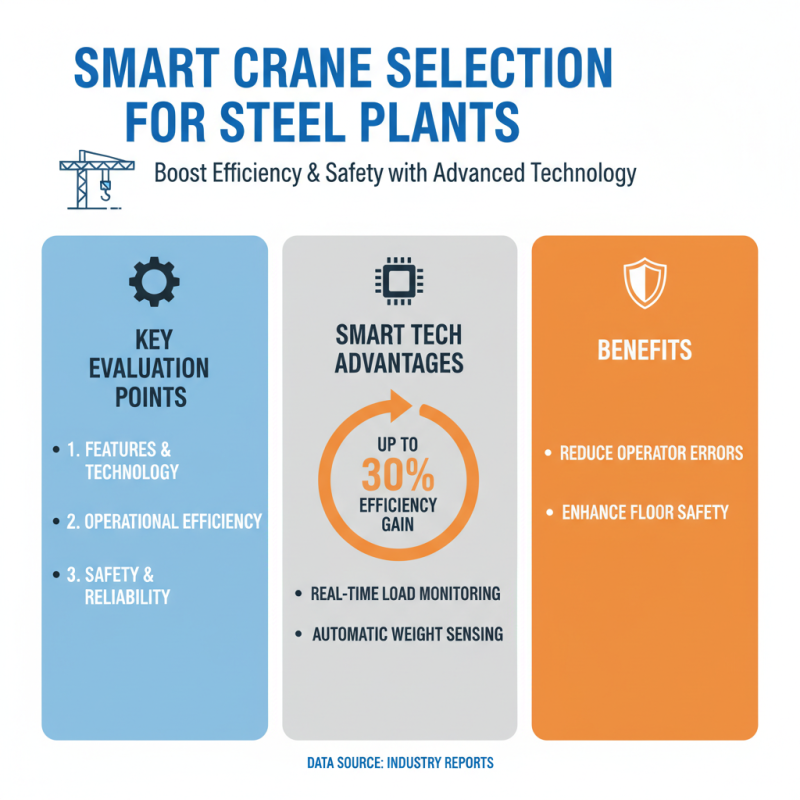
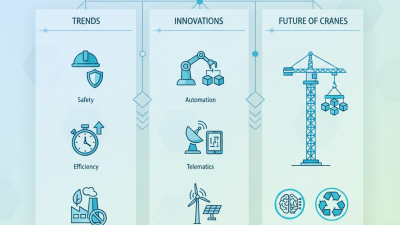
When selecting a steel plant crane, it's crucial to evaluate its features and technologies carefully. Efficiency is key. According to industry reports, cranes equipped with smart technologies can boost operational efficiency by up to 30%. These advancements include real-time load monitoring and automatic weight sensing. They help reduce operator errors and enhance safety on the floor.
Another important aspect is the crane's lifting capacity. Many operators underestimate the importance of selecting appropriate capacity. A mismatch can lead to significant downtime or even accidents. A study cited by the Crane Manufacturers Association highlighted that improper crane specifications account for nearly 25% of operational inefficiencies in steel plants.
Innovative features like telematics are becoming increasingly important. They enable remote monitoring of crane performance, which helps in predictive maintenance. Data from recent research indicates that facilities adopting these technologies can reduce maintenance costs by up to 15%. Yet, implementing these systems requires an upfront investment, which can be daunting for some operators. It's essential to weigh the initial costs against potential long-term savings and efficiency gains.
Consider the Operating Environment and Space Constraints
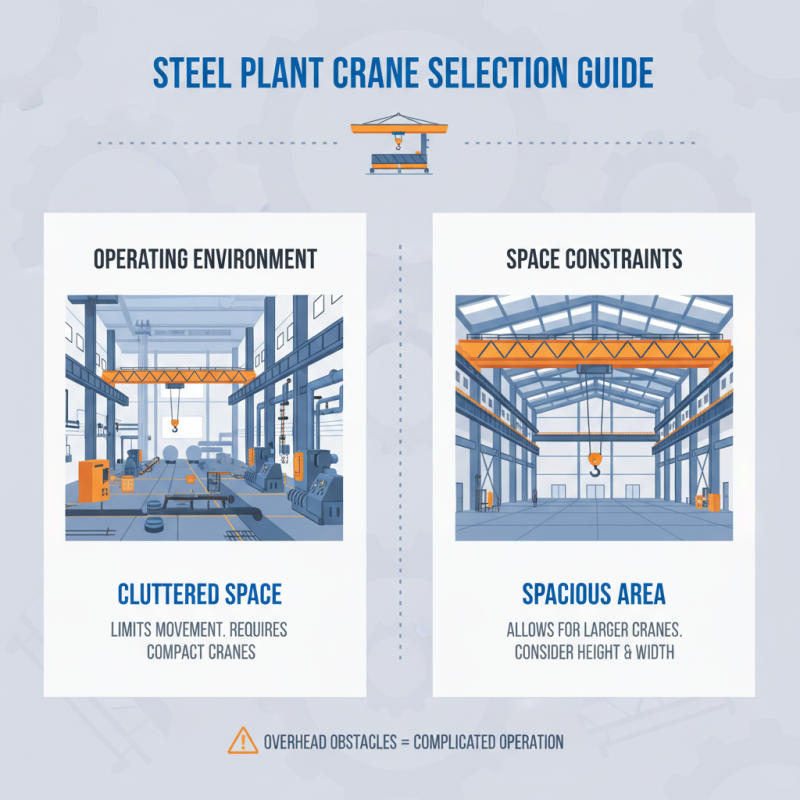
When choosing a steel plant crane, it's vital to consider the operating environment and space constraints. Different environments present unique challenges. A cluttered space may limit movement. Conversely, a spacious area may allow for larger cranes. Think about the height and width available. If overhead obstacles exist, they could complicate crane operation.
Tips: Assess the environment regularly. Look for changes that might affect operation. An unexpected obstacle could halt productivity. Also, evaluate floor conditions. Uneven surfaces can affect crane stability. Remember that safety should never be compromised.
Space constraints can dictate the type of crane you can use. In narrow aisles, a more compact crane may be necessary. If space is tight, consider a crane with a smaller footprint. This choice can maintain efficiency while working within limitations. It's essential to strike a balance between power and size.
Tips: Always measure before purchasing. Don’t assume existing space will work. An accurate measurement can save time and costs. Engage with operators to understand their needs. Their insights can help refine your choice. The right crane is pivotal for smooth operations.
Assess Budget and Maintenance Costs for Long-Term Use
When considering a steel plant crane, budget is crucial. Determine your spending limit early on. It’s easy to get carried away with options. Look closely at initial purchase costs, as well as installation fees. This helps form a practical budget. Remember, a higher initial cost doesn’t always mean better quality.
Maintenance costs can catch you off guard. Some cranes require more upkeep than others. Research frequency of maintenance for each option. Repairs can quickly add to overall expenses. Consider skilled labor costs too. It’s often underestimated but can drain your budget.
Think about the long-term implications of your choice. A cheaper crane may seem appealing but could lead to higher costs later. Analyze your production needs. Can the crane adapt? Will it meet demands over time? These questions are vital. Reflect on your choices carefully to ensure they align with your budget and future needs.