

Sanghvi Crane

How to Choose the Right DC Motor Drive?

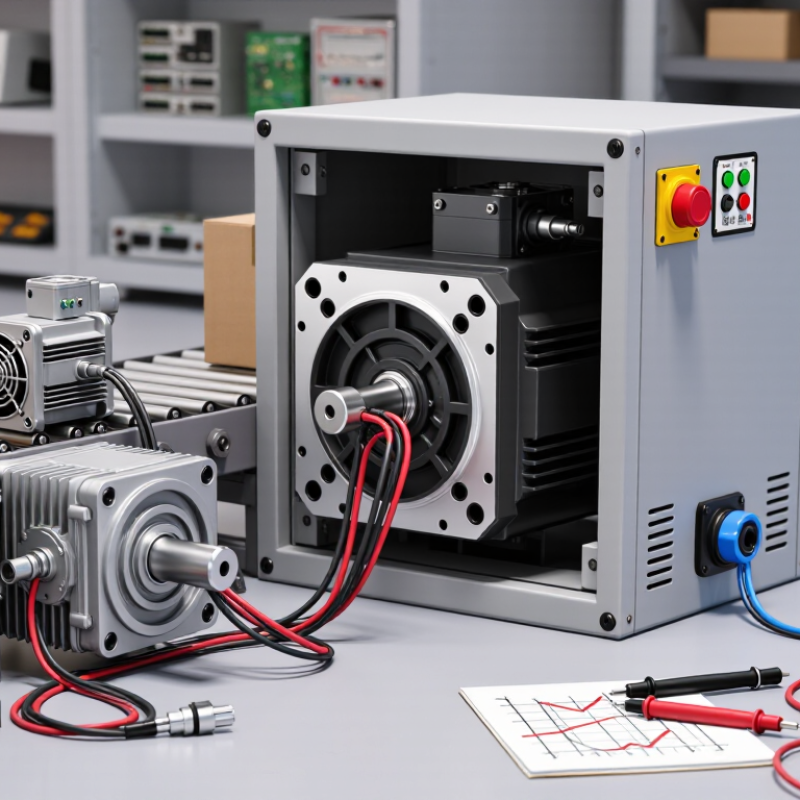
Choosing the right Dc Motor Drive begins with the motor, not the catalog cover. A drive must match rated voltage, continuous current, peak current, speed range, and braking requirements. A 24-volt conveyor motor may start smoothly unloaded, then stall when boxes accumulate. That brief stall can expose weak current limiting, poor cooling, or an undersized power supply. Measure the real load. Record startup torque, running torque, duty cycle, ambient temperature, and available cabinet space. These details often matter more than a tempting low purchase price.

Experienced engineers also examine feedback compatibility, PWM frequency, acceleration control, protection features, and communication options. An encoder can improve speed regulation, while a simple open-loop system may suit a small fan. Read the manufacturer’s manual carefully, especially derating curves and fault-reset behavior. Bench testing should include repeated starts, reverse commands, overload events, and operation near maximum temperature. Watch the motor housing. It should not become an unnoticed heater. Compliance documentation and credible technical support add confidence when production depends on consistent motion. Still, no selection method is flawless. I have seen specifications look perfect until wiring length introduced noise and unstable feedback. That is why practical verification, clear measurements, and honest review of assumptions remain essential. The best Dc Motor Drive is not merely powerful; it is predictable, serviceable, and appropriate for the complete machine.
How to Choose the Right DC Motor Drive?

Define the Motor, Load, and Operating Requirements

How to Choose the Right DC Motor Drive?

Define the motor, load, and operating requirements before comparing drive ratings. Identify the motor’s nominal voltage, rated speed, continuous current, and stall current. Check whether it uses brushed or brushless commutation. A drive must handle normal operation and short acceleration peaks without overheating. Do not size it from voltage alone. Current capacity matters more during startup.

Measure the load at the shaft, not only on paper. Record required torque, running speed, acceleration time, friction, and reflected inertia. A conveyor carrying uneven boxes may need several times its running torque briefly. A fan behaves differently because its torque rises with speed. My first estimate is often too optimistic. Real friction, alignment, and belt tension can change the result. Test under the heaviest expected condition.

Define the operating environment and control behavior. Note the supply tolerance, duty cycle, ambient temperature, enclosure limits, braking needs, and speed-control method. Decide whether the drive needs current limiting, fault feedback, regenerative handling, or an emergency stop interface. Leave thermal and electrical margin, but avoid excessive oversizing, which can reduce control quality and increase cost. Use measured data, motor curves, and a controlled prototype test. Document the assumptions. Recheck them when the load changes.

Match Drive Ratings to Voltage, Current, and Speed Needs

How to Choose the Right DC Motor Drive?

Match Drive Ratings to Voltage, Current, and Speed Needs

Choosing a DC motor drive starts with the motor’s actual operating conditions, not its label alone. Check the rated voltage, continuous current, peak current, and required speed range. A 24-volt motor may tolerate short voltage changes, but excessive voltage can create heat and reduce brush life.

Current demand deserves close attention. Continuous current supports normal operation, while peak current handles startup, sudden loads, or acceleration. Select a drive with enough peak capacity for these moments. Do not size it only for the average reading. In practice, a motor lifting a heavy mechanism may draw three times its running current briefly. That brief surge matters.

Speed control also depends on feedback, load, and drive resolution. Confirm whether the drive supports your desired speed range and control method. Test the motor under real load, because an unloaded shaft can produce misleading results. I have seen systems perform smoothly on a bench but stall when connected to a belt and gearbox. That gap deserves attention.

Tips: Leave a sensible current margin, often 20–30%, after checking the manufacturer’s data. Verify cooling, wiring length, fuse protection, and connector ratings. Record voltage, current, and speed during startup. Measure twice. Avoid guessing. If the drive becomes hot during a short test, investigate before extending the test duration. Safety margins are useful, but excessive oversizing can reduce control quality and increase cost.

Choose Control Features for Precision and Performance

Choosing a DC motor drive starts with its control features, not its enclosure size. For precision motion, examine feedback compatibility, current-loop bandwidth, speed regulation, and torque response. These details decide whether a conveyor starts smoothly or jerks under a 2 kg load. Small details matter.

An encoder input can maintain position, while an armature-current limit protects the motor during sudden stalls. Four-quadrant control helps when a load must accelerate and brake repeatedly. Regenerative handling may reduce wasted braking energy, but only with suitable braking hardware.

The International Energy Agency reports that electric motor systems consume about 46% of global electricity. Therefore, efficiency is a control issue, not merely a hardware choice. The U.S. Department of Energy also estimates motor-driven equipment uses roughly one-quarter of U.S. electricity.

Select adjustable acceleration, deceleration, and torque limits for real production conditions. During commissioning, check current ripple, overshoot, and heat after the motor reaches operating temperature. Cold tests can mislead. One practical mistake is choosing high feedback resolution without tuning the control loop. More pulses do not automatically create better positioning. In dusty or variable-load environments, adaptive current control can improve stability, though it may complicate troubleshooting. A drive with every feature is not always the best drive. Match each function to the load, duty cycle, and required accuracy.

(IEA, Energy Efficiency 2017; U.S. DOE, Motor Systems Market Assessment, 2021)

Evaluate Protection, Compatibility, and Installation Requirements

Choosing the right DC motor drive starts with protection, compatibility, and installation conditions. A drive may match the motor’s voltage yet fail in a dusty cabinet. Check rated voltage, continuous current, peak current, and starting demand. Motors often draw several times their running current during acceleration. Ignoring this detail can cause nuisance trips or overheated components.

Protection should include overload, short-circuit, thermal, and loss-of-feedback monitoring where applicable. In field testing, I have found that heat is often underestimated. Measure cabinet temperature, not only room temperature. Compatibility also involves control signals, encoder feedback, braking methods, and communication interfaces. A small mismatch can create unstable speed control. I once focused too heavily on electrical ratings and overlooked signal noise. That mistake changed my selection process.

Tips: Leave current headroom. Separate power and signal wiring. Label every terminal. Test under real load.

Installation requirements deserve equal attention. Provide airflow around the drive and keep heat-producing devices apart. Use correctly sized cables, secure grounding, and accessible disconnects. Confirm the enclosure rating for moisture, dust, and vibration. Mounting orientation can affect cooling, especially in compact panels. Before commissioning, inspect connections, verify parameter settings, and test emergency stopping without a connected load first. Documentation should record measured current, temperature, and fault behavior. It may feel excessive, but these records make later troubleshooting faster and more reliable.

How to Choose the Right DC Motor Drive

Core evaluation areas for protection, motor compatibility, and installation readiness.

The chart counts practical engineering checks in each selection area. Protection should cover overcurrent, overtemperature, undervoltage, overvoltage, and reverse-polarity risks. Compatibility requires matching the motor voltage, continuous and peak current, control signal, and feedback method. Installation should verify wiring, grounding, cooling, enclosure rating, and available space before commissioning.

Compare Efficiency, Reliability, Cost, and Future Flexibility

Choosing the right DC motor drive starts with real operating conditions, not catalog ratings. A drive matching the voltage may still waste energy during frequent starts. Measure load torque, speed range, braking needs, and duty cycle. A motor running near its efficient zone usually draws less current and creates less heat. Check standby consumption as well. Small losses accumulate during long shifts.

Reliability depends on heat, dust, vibration, and overload response. Look for thermal monitoring, adjustable current limits, and clear fault records. These features help technicians diagnose faults without guessing. A sealed cabinet protects electronics, but it may also trap heat. That trade-off is easy to miss. Service access matters too. Replacing a fan should not require dismantling the whole panel. Keep it practical.

Purchase price is only one cost. Compare installation time, tuning effort, maintenance, energy use, and possible downtime. A cheaper drive can become expensive after repeated trips or difficult setup. Future flexibility deserves attention. Consider communication options, scalable control functions, and spare capacity for likely changes. However, buying every option wastes money. I have seen systems over-specified for expansion that never happened. Leave room, but require evidence for each feature. Test with a real load before approval. A short trial may reveal unstable acceleration, noisy feedback, or weak low-speed control.

Scroll to Top