
Sanghvi Crane

How to Choose the Best Telescopic Crawler Crane?

Choosing the best telescopic crawler crane is not simply a matter of comparing maximum lifting capacity. The right machine must match the worksite, load path, ground conditions, and transport plan. A crane that lifts 50 tonnes in ideal conditions may perform very differently on uneven soil or restricted ground.

Experienced lifting teams examine rated load charts, boom length, working radius, counterweight options, and crawler stability. They also check hydraulic response, operator visibility, attachment compatibility, and maintenance access. Small details matter. A poorly positioned access panel can delay service during a demanding project.

This guide explains how to evaluate these factors with practical judgment. Start with the heaviest planned load, then study the required radius and lifting height. Consider wind exposure, underground structures, overhead obstacles, and available setup space. Manufacturer specifications provide the foundation, but experienced operators reveal how a crane behaves in real conditions. Their feedback can expose limitations that brochures rarely show.

Transport weight and assembly time also influence the final choice. A compact model may reduce logistics costs, while a larger model could improve lifting margins. Neither option is always better. No selection method is flawless, and project estimates can change. That weakness deserves attention before purchase or rental decisions. Reliable buyers compare independent inspection records, service support, training quality, and documented equipment history. Careful planning reduces surprises and supports safer, more efficient lifting operations.
How to Choose the Best Telescopic Crawler Crane?

Understanding Telescopic Crawler Crane Types and Applications

How to Choose the Best Telescopic Crawler Crane?

Understanding Telescopic Crawler Crane Types and Applications

Choosing a telescopic crawler crane begins with understanding its design and working environment. This crane combines tracked mobility with a telescopic boom. The boom extends through hydraulic sections, allowing flexible lifting in restricted areas. Compact models suit urban construction, plant maintenance, and narrow access roads. Heavier models provide greater lifting capacity for bridge work, industrial installation, and large structural components. Some machines include fixed jibs or auxiliary winches. These features can improve reach, but they also affect transport weight and setup time.

Application details matter more than headline lifting capacity. On soft ground, crawler tracks spread pressure better than standard tires. However, tracks do not remove the need for ground assessment. A crane may still require timber mats or engineered support. Watch the wind. High loads and long boom extensions can reduce stability quickly. Utility contractors often value compact dimensions and precise movement. Construction crews may prioritize lifting height, counterweight options, and travel speed. In congested sites, tail swing and outrigger clearance deserve careful checking.

A reliable selection process reviews the load chart, boom length, working radius, and site access together. Confirm the real load, including slings, hooks, and spreader beams. Ask an experienced engineer to verify ground conditions and lifting plans. Field teams sometimes focus too heavily on maximum capacity. That assumption can fail. I have seen small access limits delay an otherwise suitable crane. Inspect hydraulic lines, tracks, safety devices, and maintenance records before hiring. A clean inspection report is useful, but it is not a substitute for practical site judgment.

Matching Crane Capacity to Load, Reach, and Working Conditions

Choosing a telescopic crawler crane starts with the load, not the crane’s advertised maximum capacity. A 20-ton component may require a much larger crane at a long working radius. Include the hook block, slings, spreader beam, and other lifting accessories in the gross load. Small errors matter.

Check the load chart for the exact boom length, radius, and lifting angle. Capacity usually falls sharply as the load moves farther from the crane. A 10-ton lift at 8 meters may become unsafe at 14 meters. Keep the boom as short as practical. Do not guess. An experienced lift planner also checks clearance beneath power lines, nearby structures, and the swing path before selecting equipment.

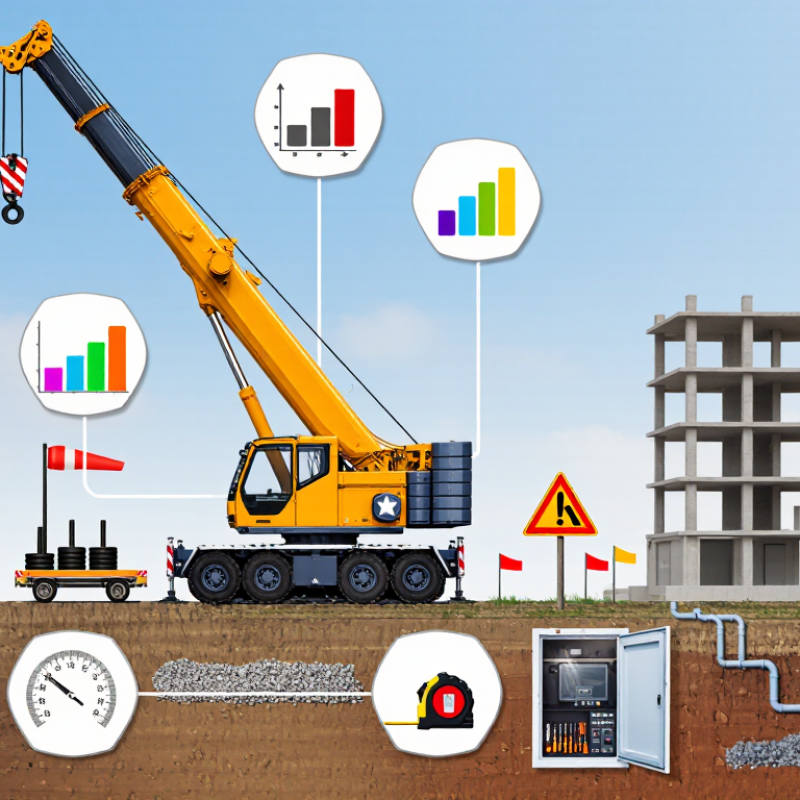
Working conditions can change the decision. Soft soil may need steel mats or engineered ground improvement. Slopes, standing water, wind, and limited access can affect stability and crawler movement. Confirm ground-bearing pressure with a competent engineer when the surface is uncertain. Weather limits deserve attention too, especially with large panels that catch wind. A quick spreadsheet may look convincing, yet it can hide missing rigging weight or an incorrect radius. That is where planning can go wrong. Have a qualified operator review the chart, inspect the crane, and verify site measurements before the lift. A small margin is not always enough. Safety planning should reflect the real site, not an ideal drawing.

How to Choose the Best Telescopic Crawler Crane? - Matching Crane Capacity to Load, Reach, and Working Conditions

Typical Crane Class Nominal Rated Capacity
at Short Radius
Typical Main Boom Length Practical Working Radius* Recommended Planning Load Typical Ground Pressure Range Suitable Applications
Small telescopic crawler crane 30–50 t 10–35 m 8–25 m 15–35 t 60–100 kPa Light structural steel, small precast elements, utility work, maintenance, and confined construction sites.
Medium telescopic crawler crane 60–100 t 12–45 m 10–35 m 30–70 t 70–120 kPa General industrial construction, medium-size precast panels, HVAC installation, bridge components, and plant maintenance.
Heavy telescopic crawler crane 120–180 t 14–55 m 12–45 m 60–130 t 90–160 kPa Large precast units, refinery equipment, bridge erection, wind-turbine components, and heavy industrial lifts.
Very heavy telescopic crawler crane 200–300 t 16–65 m 15–55 m 100–220 t 120–220 kPa Power-generation equipment, major bridge sections, large industrial modules, and high-capacity infrastructure projects.
Extra-heavy telescopic crawler crane 350–500 t 18–75 m 18–65 m 180–350 t 160–300 kPa Exceptional heavy lifts, offshore and energy infrastructure, large modules, and complex erection projects.
Selection Factor Data to Confirm Recommended Selection Rule Why It Matters
Total lifted load Load weight plus hook block, slings, spreader beams, lifting points, and other accessories. Use the total rigging load, not the payload alone. Select a load chart capacity that exceeds the total load at the actual radius. Accessories can add several percent to the lifted weight and directly reduce the available chart capacity.
Working radius Horizontal distance from the crane’s slewing center to the load center of gravity. Check the worst-case radius during pickup, slewing, and placement; do not size the crane using the shortest radius only. Rated capacity decreases as radius and boom length increase because overturning moment rises.
Required hook height Elevation of the final lifting point, load height, rigging length, and required clearance over obstacles. Choose a boom configuration that provides the required height without creating an excessive radius or angle. A longer boom may improve height but can substantially reduce lifting capacity and increase deflection.
Ground conditions Allowable bearing pressure, soil type, slope, voids, underground services, and access-route limitations. Verify maximum crawler ground pressure against a site-specific geotechnical assessment and use mats or reinforcement when required. Crawler tracks distribute load, but they do not eliminate the risk of settlement, sliding, or edge failure.
Wind and weather Wind speed limits, exposed sail area, temperature, rain, ice, visibility, and lightning risk. Apply the manufacturer’s wind limits and the project lift plan; reduce or stop lifting when conditions exceed approved limits. Wind acting on the boom and load can increase dynamic forces and overturning moment.
Transport and assembly Transport weight, axle limits, site access, turning radius, assembly area, and available lifting equipment. Select a configuration that can be delivered, assembled, and removed within the site’s physical and regulatory limits. A crane that fits the load chart may still be impractical if it cannot access or be assembled safely on site.
Required capacity margin Project rules, lift category, load uncertainty, dynamic effects, and possible future radius changes. Avoid operating at the absolute chart limit; use the applicable local regulations, lift plan, and manufacturer guidance to establish the margin. A practical margin helps accommodate measurement errors, load movement, and changing site conditions.

*The capacity, boom length, working radius, and ground-pressure figures are indicative planning ranges for generic telescopic crawler crane classes. Final selection must be verified against the exact crane load chart, configuration, rigging arrangement, site bearing capacity, weather limits, and the approved lift plan.

Evaluating Mobility, Ground Pressure, and Site Accessibility

Choosing a telescopic crawler crane starts with the ground, not the lifting chart. On real sites, mobility can decide whether the planned lift happens at all. Crawler tracks spread weight across soft soil, reducing rutting and sudden settlement. Still, “low ground pressure” is not a guarantee. I have seen firm-looking gravel fail after rain. A site investigation should record soil strength, drainage, slopes, and underground services.

Compare the crane’s operating pressure with the site’s allowable bearing capacity. Include the load, counterweights, attachments, fuel, and track contact area. Ask for calculations, not a reassuring estimate. Temporary steel plates or engineered mats may improve access, but they add time and handling risk. Check turning space, travel distance, overhead clearance, and the width of every gate. A narrow entrance can defeat excellent lifting performance. Track length also matters on slopes and uneven approaches.

For restricted sites, review the machine’s transport dimensions and setup sequence before delivery. Measure the route in person when possible. Drawings can miss a low wall or soft shoulder. Operators should confirm travel limits, permissible gradients, and wind conditions from verified technical data. An experienced lift supervisor can challenge optimistic assumptions and adjust the plan. That challenge is valuable. No selection is perfect. Rain, congestion, or a changed load can expose weak planning, so reassess conditions before each move.

Comparing Safety Systems, Controls, and Operator Requirements

Choosing the best telescopic crawler crane starts with its safety architecture, not maximum lifting capacity. BLS Census of Fatal Occupational Injuries data recorded 297 fatal occupational injuries involving cranes from 2011 to 2020. The figure remains uncomfortable.

A practical inspection should confirm a load moment indicator, rated-capacity display, anti-two-block protection, slew limits, emergency stopping, and clear camera views. These systems should warn before overload, not merely record it. OSHA’s Cranes and Derricks in Construction standard, 29 CFR 1926 Subpart CC, also emphasizes ground conditions, assembly controls, inspections, and operator qualification. A stable track footprint matters greatly on uneven soil. So does accurate load-radius information.

Controls should feel predictable through gloves, rain, and poor visibility. Proportional joysticks reduce sudden movements, while readable displays help operators track boom length, angle, radius, and wind limits. However, electronic protection is not a substitute for judgment. It can be miscalibrated. It can also be ignored.

Operator requirements deserve equal attention. Certification alone does not prove site competence. Employers should verify practical skill, machine-specific familiarization, signal communication, lift planning, and emergency response. Fatigue and language barriers need active management. OSHA requires evaluation of operator knowledge and skill, while ISO 9927-1 supports structured crane inspections. A short pre-lift briefing, verified by the operator and signal person, often prevents more confusion than another dashboard feature.

How to Choose the Best Telescopic Crawler Crane?

Comparing Safety Systems, Controls, and Operator Requirements

The chart compares the number of baseline checkpoints recommended for a practical crane-selection review. The checklist is based on requirements and evaluation areas addressed by OSHA 29 CFR 1926 Subpart CC, including rated-capacity indicators, anti-two-block protection, level indicators, control functions, operator certification, training, and periodic evaluation. A higher score indicates more verification points to complete before purchase or rental.

Assessing Total Cost, Maintenance, and Supplier Support

Choosing a telescopic crawler crane requires more than comparing purchase prices. Total cost includes transport, assembly, fuel, operator training, inspections, storage, and eventual resale value. A crane with a lower price may demand more frequent hydraulic repairs. That matters.

On real construction sites, maintenance details quickly affect productivity. Check the undercarriage, telescoping sections, wire ropes, hydraulic hoses, and control systems. Ask for service intervals and typical replacement costs. Review documented maintenance records, not only sales estimates. A few missing records can signal future uncertainty.

Include downtime in your calculation. One failed hose can stop lifting work for hours, especially on remote sites.

Supplier support deserves equal attention. Confirm local parts availability, technician response times, warranty limits, and emergency service procedures. Request training for operators and maintenance staff. Clear load charts and inspection guidance also reduce avoidable mistakes. Speak with current users about response quality, not just delivery speed. Written promises can look strong. Field support may differ. I would compare at least three lifecycle cost estimates and test each supplier’s assumptions. Some calculations overlook seasonal transport or corrosion protection. That omission can distort the result. A practical evaluation should match the crane to actual ground conditions, lifting frequency, project duration, and available service skills.

Scroll to Top