
Sanghvi Crane

What Is the Largest Crane in the World in 2026?

What is the largest crane in 2026? The answer depends on how “largest” is measured. Lifting capacity, boom height, working radius, and mobility can produce different winners. A crawler crane may dominate a power-plant site, while a floating crane may lift heavier offshore structures. That distinction matters. Without it, the headline sounds stronger than the evidence.

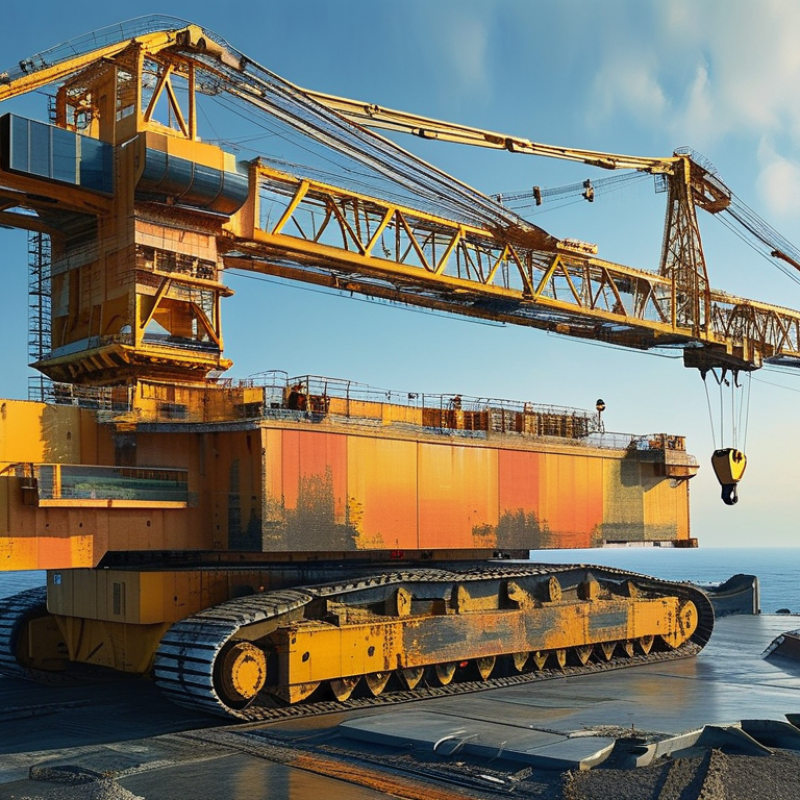
Sarens CEO Wim Sarens has described the SGC-250 as “the largest crane in the world.” The company’s machine, often called Big Carl, uses a 250-metre main boom and a maximum lifting capacity of 5,000 tonnes. Its scale is difficult to imagine. More than 3,000 tonnes of counterweights help stabilize the crane, while its ring-shaped track allows controlled movement around a construction site. The SGC-250 was developed for major infrastructure projects, including nuclear construction, where precision matters as much as raw power.

Still, the claim needs careful wording in 2026. “Largest crane” is not one universal category. Some offshore cranes exceed land-based machines in specialized lifting operations. Others offer greater height but lower capacity. Manufacturers also update technical specifications, and project conditions can limit real-world performance. This article compares the leading candidates using published capacity figures, design details, and operating records. It also considers an uncomfortable question: does the biggest crane always provide the best solution? Sometimes, a smaller machine reaches the load more safely, cheaply, and efficiently. That is less dramatic, but probably more useful.
What Is the Largest Crane in the World in 2026?

Defining What “Largest Crane” Means in 2026

What Is the Largest Crane in the World in 2026?

Defining What “Largest Crane” Means in 2026

In 2026, “largest crane” has no single answer. The result depends on the measurement used. A floating heavy-lift crane may handle over 20,000 metric tons, while a land crawler crane may offer greater mobility. Some machines reach more than 200 meters above the ground. Others achieve exceptional horizontal reach across ports or offshore construction sites.

A crane’s maximum lifting capacity is only one part of its identity. Engineers also examine working radius, boom length, hook height, operating stability, and transport requirements. A crane lifting 5,000 tons at a short radius is not equal to one lifting 1,000 tons far from its center. Vessel-mounted cranes add another factor: the supporting ship’s displacement and stability. These details can change the ranking. A simple list can mislead readers.

Tips: Check the rated load chart, not only the headline capacity. Confirm whether the figure applies at minimum radius, maximum radius, or a special configuration. Ask who certified the measurement and when it was recorded. Specifications can change after upgrades. I would also compare real project performance, because laboratory capacity does not always reflect rough seas, wind, or restricted construction sites. Small wording differences matter.

Identifying the World’s Largest Crane by Lifting Capacity

By lifting capacity, the world’s largest crane system in 2026 can handle about 20,000 metric tonnes. It uses two offshore cranes, each rated near 10,000 tonnes. This figure comes from specialist offshore fleet reporting published by Offshore Energy and aligns with classification information for ultra-heavy lifting vessels.

That distinction matters. The 20,000-tonne figure is a combined capacity, not one hook lifting 20,000 tonnes alone. Each crane works independently or in tandem, depending on the load plan. At maximum capacity, the system can raise enormous offshore structures, including bridge sections, production modules, and subsea foundations. The lifting vessel also uses ballast control to remain stable during operations.

Capacity is never a simple number. DNV lifting-appliance rules show that safe ratings depend on radius, sea conditions, ballast, wire configuration, and dynamic loading. A crane may carry its headline load only within a carefully controlled operating envelope. I initially treated the combined figure as a single-crane record. That was too simplistic.

Field engineers normally review load charts, weather limits, and deck strength before approving a lift. A 10,000-tonne crane can lose substantial capacity as the hook moves farther from the vessel. The practical answer is therefore precise: the largest lifting system is rated around 20,000 tonnes combined, while the largest individual crane is rated around 10,000 tonnes.

What Is the Largest Crane in the World in 2026? - Identifying the World’s Largest Crane by Lifting Capacity

Rank Crane or lifting system category Rated lifting capacity Configuration Operating environment Approximate commissioning Assessment in 2026
1 World’s largest integrated topsides lifting system 48,000 metric tonnes Two synchronized lifting systems, each rated at approximately 26,000 metric tonnes Offshore heavy-lift vessel 2016 Largest overall lifting capacity when the combined integrated system is counted; it is not a single conventional crane.
2 World’s largest conventional offshore crane vessel 20,000 metric tonnes combined Two offshore cranes, each rated at 10,000 metric tonnes Offshore construction and heavy-lift operations 2019 Largest commonly cited capacity for a conventional crane vessel using two dedicated heavy-lift cranes.
3 Large semi-submersible crane vessel 14,200 metric tonnes combined Two cranes rated at approximately 7,100 metric tonnes each Offshore installation and decommissioning 1998 One of the largest established semi-submersible crane-vessel capacities.
4 Large land-based crawler crane 5,000 metric tonnes Crawler-mounted lattice-boom crane with heavy-lift configuration Onshore industrial construction 2020 Among the largest land-based crawler cranes by maximum advertised capacity.
5 Heavy-duty floating sheerleg crane 3,000 metric tonnes Single heavy-lift boom mounted on a floating platform Ports, bridges, offshore construction and salvage 2010s A major floating-crane category, but below the capacity of the largest offshore crane vessels.
Conclusion: By total lifting capacity, the largest lifting machine in 2026 is the offshore vessel equipped with a 48,000-metric-tonne integrated topsides lifting system. If the definition is limited to conventional cranes, the leading offshore crane vessel has a combined rated capacity of 20,000 metric tonnes from two 10,000-metric-tonne cranes.
Measurement note: Capacities are maximum rated values and depend on load radius, boom configuration, sea state, vessel stability, lifting height and operational restrictions. Combined capacities do not mean that one individual crane can lift the entire stated load.

Examining Its Design, Dimensions, and Operating Systems

In 2026, the world’s largest heavy-lift crane system is a semi-submersible vessel with a combined lifting capacity of about 20,000 metric tonnes. Its two revolving cranes can lift roughly 10,000 tonnes each. Industry coverage from Offshore Engineer identifies this capacity as the highest currently available for offshore construction. The vessel measures approximately 220 metres long and 102 metres wide. Each crane rises about 144 metres above the deck, creating a striking steel profile beside offshore platforms.

Its design depends on stability, not size alone. Ballast tanks lower the hull, while a dynamic-positioning system uses satellite navigation, motion sensors, and azimuth thrusters to hold position. A redundancy-rated control architecture helps maintain operations after equipment faults. DNV guidance for large offshore units stresses independent power and control pathways. That detail matters during heavy lifts, when even small movements can shift thousands of tonnes. The system can also operate on lower-emission marine fuel, although fuel performance varies with load and weather. The figures are impressive, but “largest” can be misleading because lifting capacity, outreach, and vessel displacement are measured differently.

Tips: Check the crane’s tandem capacity, hook height, ballast method, and weather limits before comparing it with other machines. Review the latest classification report, not only marketing figures. Real operations remain less predictable than specifications suggest.

Explaining the Projects and Industries That Use It

What Is the Largest Crane in the World in 2026?

In 2026, the world’s largest crane is generally a 20,000-metric-ton-class gantry crane in China. Its lifting rating exceeds the weight of several hundred loaded trucks. Engineers use it to raise complete ship sections, offshore platforms, and large energy modules. A lift may involve steel blocks taller than apartment buildings, with millimetre-level alignment required during assembly.

Shipyards depend on this capacity for very large vessels and floating production units. Offshore wind projects also need heavy lifting for foundations, substations, and turbine components. The Global Wind Energy Council reported 117 gigawatts of new wind capacity in 2023, including 10.8 gigawatts offshore. That growth increases demand for larger installation equipment, especially near deep-water construction sites.

Petrochemical plants, bridge programs, and nuclear-energy projects use similar heavy-lift methods. The International Energy Agency reported that global energy investment was expected to reach 3 trillion dollars in 2024, with clean energy receiving about 2 trillion dollars. These projects often require factory-built modules transported by barge and positioned with extreme precision.

A crane’s rated capacity is only one measure. Reach, wind limits, ground pressure, and lifting speed can matter more on a real site. Calling one machine “the largest” therefore simplifies a complicated comparison. Sometimes, the practical winner is the crane that can complete the lift safely, not the one with the biggest number.

Comparing It with Other Record-Breaking Cranes

What Is the Largest Crane in the World in 2026?

The largest crane in 2026 depends on how “largest” is measured. By rated lifting capacity, a land-based crawler crane reaching about 5,000 tonnes remains a leading contender. Its enormous lattice boom can rise beside a power plant or shipyard structure. However, this figure describes a controlled lift, not every working condition. Capacity falls as the load moves farther from the crane’s center.

Comparisons become more complicated offshore. Floating cranes can lift over 10,000 tonnes in specialized operations, but they work from reinforced vessels and depend on sea conditions. A 4,000-tonne crawler crane may offer better mobility on prepared ground. Smaller ring cranes can also outperform larger machines at specific radii. The record changes when engineers compare reach, height, transport limits, or usable lifting capacity. That is the part many rankings miss. I would not treat one headline number as final evidence.

Tips: Check the lifting radius, boom length, ballast, and test conditions before accepting a record. Ask whether the figure covers a single lift or routine operations. Photos can mislead; engineering tables are more reliable. A crane that looks gigantic may carry less than expected at full reach.

What Is the Largest Crane in the World in 2026?

Comparison of record-breaking cranes by maximum documented lifting capacity

Based on maximum documented lifting capacity, the largest crane in 2026 is the heavy-lift platform crane rated at 20,133 tonnes. A twin-crane offshore vessel system follows closely with a combined capacity of 20,000 tonnes. Capacities depend on configuration, radius, and operating conditions, so these figures are not directly equivalent in every lifting scenario.

Scroll to Top