China Top Natural Gas Boiler Manufacturers for Sale
Chinese Natural Gas Boiler manufacturers serve hotels, factories, hospitals, schools, and district heating projects worldwide. This guide examines suppliers offering equipment for sale, not merely attractive catalog photographs. It considers manufacturing experience, engineering capability, product documentation, factory inspection, and after-sales support. A dependable supplier should explain burner design, heat exchanger materials, control systems, fuel consumption, emissions performance, and service intervals clearly. Real projects matter.
A capable Natural Gas Boiler producer can provide capacity calculations, layout drawings, installation guidance, commissioning support, and operator training. Look for traceable quality procedures, pressure testing, welding controls, and conformity documents for the destination market. Independent inspections may add confidence before shipment. Ask for references involving similar water temperatures, operating hours, fuel quality, and climate conditions. Details decide reliability.
However, comparison is not completely simple. Quoted efficiency may depend on load, return water temperature, and measurement conditions. A low purchase price can hide transportation, spare parts, controls integration, or maintenance costs. Some online claims also need careful verification. Buyers should request test reports, warranty terms, production photographs, and a realistic delivery schedule. Site conditions must be reviewed by qualified professionals before selection.
This overview helps importers, contractors, and facility owners compare Chinese manufacturers with practical judgment. It highlights strengths, limitations, and questions worth asking. No supplier fits every project. Careful verification remains essential.
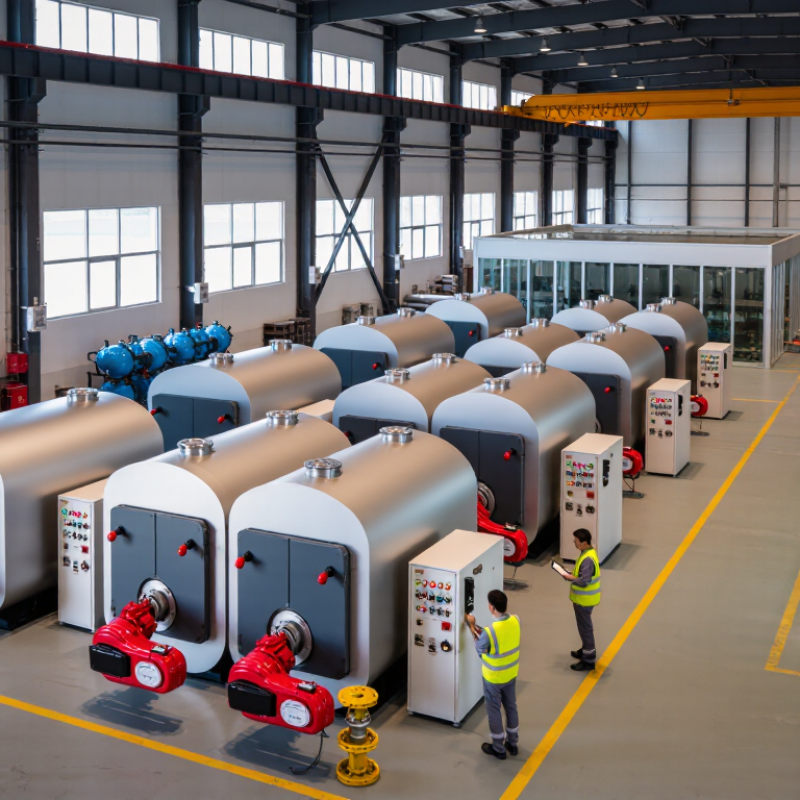
Natural Gas Boilers: Types, Applications, and Core Features
Natural gas boilers remain practical for many buildings, especially where gas networks and hydronic heating already exist. The International Energy Agency reported that buildings consume about 30% of global final energy. This makes boiler efficiency a serious purchasing issue, not a decorative specification.
The main types are conventional, non-condensing, and condensing boilers. Conventional units suit basic heating systems, but they lose more heat through flue gases. Condensing boilers recover latent heat from water vapor and can exceed 90% annual fuel utilization efficiency, according to the U.S. Department of Energy. They work best with low return-water temperatures, often below 55°C. Radiant floors and oversized radiators help achieve this condition.
Applications vary. Small wall-hung units serve apartments, offices, and shops. Floor-standing boilers fit hotels, hospitals, factories, and district heating rooms. Key features include modulating burners, stainless-steel heat exchangers, low-emission combustion, weather compensation, and layered safety controls. EN 15502 provides an important framework for gas-fired heating boilers sold in many markets.
Efficiency is not everything. A high-rated boiler may perform poorly with incorrect sizing, hard water, weak commissioning, or frequent short cycling. That part is often overlooked. Buyers should request seasonal efficiency data, tested emissions, spare-parts availability, and service records. Installation quality can decide real fuel use more than brochure claims. Reports are useful, but field measurements remain more honest.
China’s Natural Gas Boiler Manufacturing Landscape
China’s natural gas boiler manufacturing landscape serves factories, hotels, hospitals, schools, and district heating projects. Manufacturers commonly produce fire-tube, water-tube, condensing, and modular boiler systems. Output ranges from compact units for small buildings to large installations requiring dedicated boiler rooms.
Engineering quality depends on more than rated capacity. Buyers should examine thermal efficiency, burner control, gas train design, heat exchanger materials, and emissions testing. A practical factory assessment may include weld inspections, hydrostatic testing, control-panel checks, and trial operation under load. Digital monitoring is increasingly common, with sensors tracking pressure, temperature, flame status, and exhaust conditions. Documentation matters too. Clear manuals, spare-parts lists, and commissioning records reduce costly delays during installation.
The export market is broad but not perfectly uniform. Some suppliers provide strong engineering support, while others need improvement in technical communication. That difference becomes visible when a project requires custom gas pressure, unusual water quality, or winterized equipment. Buyers should verify manufacturing capacity through production photographs, inspection reports, and completed project references. Local codes and certification requirements must be checked before purchase, because approval rules vary by destination. A boiler can perform well in a factory test yet need field adjustments after shipment. That is normal, but it should be planned. Service response, remote troubleshooting, and technician training often influence operating costs as much as the purchase price.
How to Evaluate Chinese Boiler Manufacturers for Sale
Choosing a Chinese natural gas boiler manufacturer requires more than comparing catalogue prices. IEA Gas 2024 forecasts global gas demand to grow by about 2.3% annually through 2029. This supports continued boiler demand, but it also increases pressure on efficiency and emissions. Ask suppliers for tested output, fuel consumption, turndown ratio, and operating pressure. Request third-party test reports, not screenshots.
A factory audit should examine welding quality, burner calibration, control-panel assembly, and pressure testing records. Check whether the manufacturer follows applicable Chinese standards and can provide CE, ISO 9001, or local certifications required by your market. These certificates need verification. They are not automatic proof of product quality. A proper factory visit helps.
The IEA Energy Efficiency 2023 report states that buildings use about 30% of global final energy. Therefore, small efficiency gaps can create large lifecycle costs. Compare seasonal efficiency, standby losses, spare-part availability, and remote commissioning support. Inspect a running unit, including its flame signal and exhaust temperature. Price is only one variable. I have seen buyers overlook water treatment and gas-quality differences. That mistake can damage heat exchangers quickly. Ask for five-year maintenance costs and written warranty conditions. Also review production capacity during peak seasons. A supplier may offer an attractive sample unit, yet struggle with consistent batch quality. This deserves careful questioning.
Leading Manufacturer Capabilities and Product Categories
China Top Natural Gas Boiler Manufacturers for Sale
China’s natural gas boiler manufacturers serve residential, commercial, and industrial heating projects. Experienced suppliers usually provide wall-hung boilers, floor-standing units, steam boilers, and hot-water systems. Each category supports different heating loads, installation spaces, and operating schedules. A compact wall-hung model may suit an apartment, while a modular commercial system can heat hotels, schools, or workshops. Product selection should follow measured demand, not catalogue appearance.
Leading manufacturers often combine engineering design, pressure testing, combustion testing, and production quality control. Many offer stainless steel heat exchangers, low-emission burners, intelligent controllers, and weather-compensation functions.
Some factories can adjust gas valves and control logic for local fuel conditions. That detail matters. A boiler that performs well in one region may need different settings elsewhere. Factory testing is valuable, but independent verification remains sensible.
Reliable suppliers provide installation drawings, maintenance instructions, spare parts, and technical training. They should explain efficiency ratings, water pressure limits, exhaust requirements, and safety protections clearly.
Look for documented testing records and traceable component information. Warranty terms also deserve careful reading. A low purchase price can hide expensive service delays.
I have seen specifications look impressive until actual site conditions exposed weak circulation or poor access for cleaning. That risk deserves honest review before ordering.
Purchasing, Certification, Installation, and After-Sales Support
China Top Natural Gas Boiler Manufacturers for Sale
Purchasing a natural gas boiler requires more than comparing prices. Experienced buyers check heat output, gas type, water quality, and seasonal efficiency. Ask manufacturers for test reports, material specifications, and a clear warranty. Factory visits can reveal welding quality, control-panel testing, and pressure inspection procedures. Do not rely only on polished brochures. Real records matter.
Certification should match the destination market. Request relevant safety, emissions, electrical, and pressure-vessel documents before payment. A qualified manufacturer should explain which certificates apply to your project, not provide random copies. Installation also needs careful planning. Technicians should verify gas pressure, ventilation, flue routing, drainage, and emergency shut-off controls. Commissioning should include combustion testing and operator training. Small errors can become expensive.
Tips: Prepare site drawings early. Confirm spare-parts availability. Keep installation photos and commissioning records. After-sales support is equally important. Choose a supplier with remote troubleshooting, response-time commitments, maintenance guidance, and accessible replacement parts. Ask how service works after the warranty expires. Some suppliers promise fast help but lack local technicians; that risk deserves honest discussion. A practical contract should define training, inspection schedules, fault handling, and responsibility for transport. Better planning may feel slower, yet it often prevents downtime during winter demand.