

Sanghvi Crane

Top 10 Titanium Parts Suppliers for Global Buyers

Buying Titanium Parts globally requires more than comparing catalog prices. A supplier may machine a complex Ti-6Al-4V bracket accurately, yet struggle with documentation or delivery. This guide examines ten established suppliers through practical buyer concerns. These include material traceability, machining capability, inspection systems, and communication. The aim is useful clarity, not a sales promise. Real projects expose the gaps.

Each supplier is considered against evidence buyers can request, such as mill certificates, dimensional reports, and relevant quality certifications. We also consider five-axis machining, surface finishing, prototype support, packaging, and repeat-order consistency. A reliable partner should explain tolerances clearly and identify risks before production begins. Sample details matter: laser-marked batch codes, protected threads, and sealed parts can reveal process discipline. So can a prompt, technically precise quotation.

Global purchasing adds customs paperwork, currency changes, time zones, and freight uncertainty. Those issues can alter the true cost of Titanium Parts. The list therefore balances technical strength with responsiveness and commercial transparency. It is not a permanent verdict. Supplier capabilities change, and public information can remain incomplete. Buyers should verify current certificates, capacity, lead times, and acceptance criteria before placing an order. Ask direct questions. Request samples. Then judge performance against the demands of your application, industry, and risk controls.
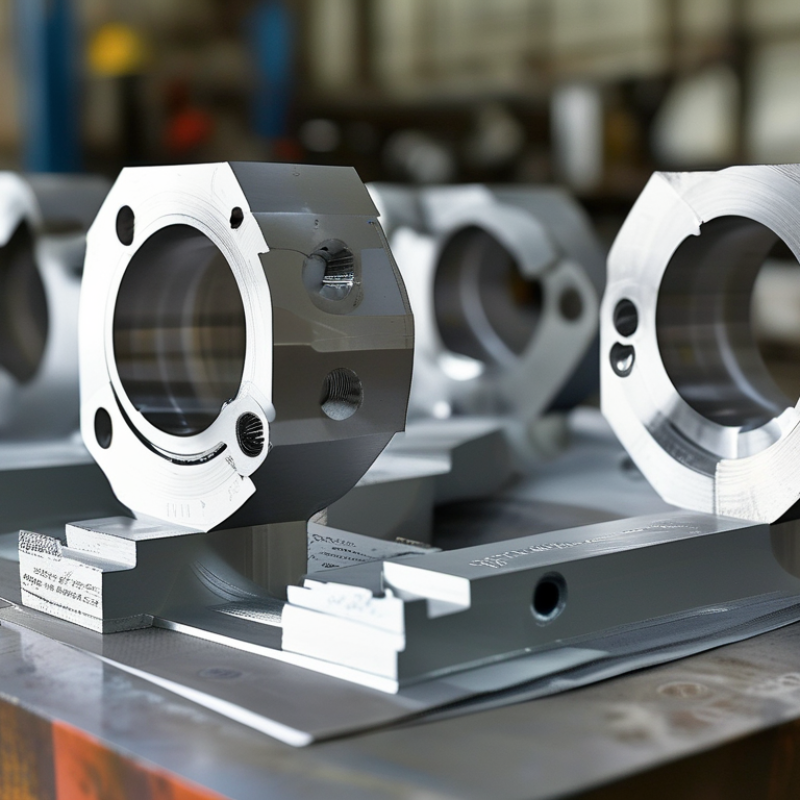
Top 10 Titanium Parts Suppliers for Global Buyers

Titanium Parts: Types, Applications, and Manufacturing Methods

Titanium Parts: Types, Applications, and Manufacturing Methods

Titanium parts include machined blocks, forged brackets, thin sheets, tubes, fasteners, and cast components. Each type suits different loads, temperatures, and production volumes. Common grades offer low density, strong corrosion resistance, or high mechanical strength. Grade selection should match the working environment, not only the purchase price.

Aerospace structures often use lightweight forged parts and precision-machined fittings. Medical equipment requires clean surfaces, stable dimensions, and dependable material traceability. Chemical processing systems may need titanium tubes, valves, and heat-exchanger components.

Manufacturing methods strongly affect performance. CNC machining creates accurate holes, threads, and curved profiles, but it can waste valuable material. Forging improves grain flow for heavily loaded parts. Casting supports complex shapes, although dimensional control may require additional machining.

Additive manufacturing can reduce scrap and produce internal channels, yet surface finishing remains challenging. Welding also demands careful shielding because contamination can weaken the joint. Inspection should include dimensional checks, surface review, hardness testing, and documented certificates. A polished drawing can still hide an impractical tolerance.

Tips: Ask suppliers about grade control, heat treatment, machining allowances, and inspection records. Request sample reports before approving volume production. Check how parts are packed; sharp edges and moisture can cause avoidable damage. Cost comparisons should include tooling, scrap, testing, and delivery risk. This step is often underestimated.

How to Evaluate Titanium Parts Suppliers Worldwide

When evaluating titanium parts suppliers worldwide, start with traceability, not attractive pricing. Ask for heat numbers, mill certificates, inspection records, and material grade evidence. The 2024 U.S. Geological Survey Mineral Commodity Summaries reported global titanium sponge capacity at roughly 300,000 metric tons annually. This scale supports availability, but it does not prove part quality. A capable supplier should explain where sponge, billet, and bar were processed. It should also identify each machining and heat-treatment step.

Check technical control through ISO 9001 certification, calibrated instruments, and documented nonconformance procedures. For aerospace or medical components, request compliance with relevant ASTM specifications and customer-approved inspection plans. Review dimensional reports using actual sample data, not blank templates. Grand View Research estimated the global titanium market at more than 25 billion U.S. dollars in 2023, showing strong demand and possible pressure on lead times. Capacity claims need verification. A video tour or third-party audit can reveal crowded machines, weak storage, or mixed material racks. I have found that polished paperwork sometimes hides inconsistent process discipline. That deserves a second review.

Tips: Compare three recent production samples. Ask for defect rates, not only on-time delivery. Confirm export packaging, insurance, and communication hours. Request a small pilot order before signing a large contract. Do not rely on certificates alone. Even experienced buyers can miss surface contamination or delayed inspection data. A clear escalation contact matters when tolerances are tight.

Top 10 Titanium Parts Suppliers for Global Buyers - How to Evaluate Titanium Parts Suppliers Worldwide

An anonymized supplier-evaluation matrix based on common titanium manufacturing capabilities, quality requirements, export readiness, and buyer verification criteria.

Rank Supplier Profile Primary Manufacturing Region Typical Titanium Materials Core Part Processes Typical Production Volume Quality Certifications to Verify Typical Lead-Time Range Global Buyer Fit Evaluation Score
1 Supplier Profile A
High-precision aerospace and medical component specialist
North America Commercially pure titanium, Grade 5, Grade 23 5-axis CNC machining, turning, deburring, surface finishing Prototype to medium series ISO 9001; AS9100 or ISO 13485 where applicable; material traceability 4–10 weeks Best for regulated, tight-tolerance components 9.4 / 10
2 Supplier Profile B
Integrated forging and precision-machining supplier
Western Europe Grade 2, Grade 5, Grade 9, Grade 23 Closed-die forging, CNC machining, heat treatment, inspection Medium to high volume ISO 9001; EN 9100 where applicable; Nadcap process approval to be verified 8–16 weeks Best for structural parts and repeat production 9.2 / 10
3 Supplier Profile C
Cost-efficient CNC and fabricated-parts producer
East Asia Grade 2, Grade 5, Grade 7 CNC milling, turning, sheet fabrication, welding, passivation Prototype to high volume ISO 9001; inspection reports; welding qualifications when required 3–8 weeks Best for commercial and industrial applications 8.9 / 10
4 Supplier Profile D
Additive-manufacturing and complex-geometry specialist
Northern Europe Grade 5 and Grade 23 titanium powder Laser powder bed fusion, heat treatment, machining, CT inspection Low to medium volume ISO 9001; ISO/ASTM 52901 practices; aerospace or medical approvals where applicable 6–14 weeks Best for lightweight and internal-channel designs 8.8 / 10
5 Supplier Profile E
Tube, pipe, and welded assembly manufacturer
Central Europe Commercially pure titanium, Grade 5, Grade 9 Tube forming, laser cutting, TIG welding, hydrostatic testing Medium to high volume ISO 9001; EN 10204 material certificates; documented weld procedures 5–12 weeks Best for chemical, energy, and fluid-handling equipment 8.6 / 10
6 Supplier Profile F
Medical and dental titanium component supplier
East Asia Grade 5 ELI, Grade 23, commercially pure titanium Micro-machining, polishing, cleaning, laser marking, packaging Prototype to medium series ISO 13485; ISO 9001; biocompatibility and cleaning documentation where required 5–11 weeks Best for implantable and surgical-device components 8.5 / 10
7 Supplier Profile G
Large-format machining and industrial fabrication provider
North America Grade 2, Grade 5, Grade 7, Grade 12 Large-format milling, turning, welding, blasting, coating preparation Medium to high volume ISO 9001; customer-specific inspection plans; welding and NDT records 6–14 weeks Best for large industrial assemblies and heavy equipment 8.3 / 10
8 Supplier Profile H
Rapid prototyping and low-volume production partner
Southeast Asia Grade 5, Grade 9, Grade 23 Rapid CNC machining, vacuum heat treatment, anodizing, dimensional inspection Prototype to low volume ISO 9001; first-article inspection; calibrated measurement records 2–6 weeks Best for development programs and pilot batches 8.1 / 10
9 Supplier Profile I
Hot forming and near-net-shape component supplier
Eastern Europe Grade 2, Grade 5, Grade 9 Hot forming, forging, heat treatment, CNC finishing, radiographic inspection Medium to high volume ISO 9001; EN 9100 where applicable; nondestructive-testing records 8–18 weeks Best for material-saving production and repeat orders 7.9 / 10
10 Supplier Profile J
Custom titanium hardware and fastening-component producer
South Asia Grade 2, Grade 5, Grade 7 Cold heading, CNC turning, thread rolling, polishing, passivation Medium to high volume ISO 9001; lot traceability; dimensional and thread inspection reports 4–10 weeks Best for fasteners, fittings, and standard hardware 7.7 / 10

Buyer verification checklist: Confirm material certificates to EN 10204 3.1 or the applicable customer standard, review dimensional and surface-finish reports, verify calibrated inspection equipment, assess production capacity, and request current certification documents before placing an order.

Profiles of the Top 10 Titanium Parts Suppliers

The ten supplier profiles represent distinct strengths in titanium part production. One specializes in aerospace forgings, while another focuses on CNC-machined brackets with tight positional tolerances. A third operates near an integrated melting facility, reducing material traceability gaps. Other profiles cover cast housings, additive-manufactured ducts, medical-grade components, welded frames, and low-volume prototypes. This range matters because titanium grades, heat treatments, and surface finishes change production risks.

Market evidence supports this supplier focus. Fortune Business Insights valued the global titanium market at about USD 26.98 billion in 2023 and projects strong growth through 2032. The U.S. Geological Survey also identifies aerospace, chemical processing, and medical applications as major demand areas. In practical terms, buyers should examine mill certificates, ultrasonic inspection records, and first-article inspection results. A supplier with impressive equipment may still lack stable batch control.

The profiles therefore assess more than price. They compare ISO 9001 or AS9100 quality systems, five-axis machining capacity, vacuum heat treatment, and export documentation. Several suppliers show strong engineering support, especially when drawings contain difficult datum structures or thin walls. Some weaknesses remain. Public capacity figures are not always independently verified, and delivery claims can exclude inspection delays. Buyers should request recent sample reports, dimensional data, and references for comparable titanium grades before signing long-term agreements. Small details reveal operational maturity.

Quality Standards, Certifications, and Customization Capabilities

For global buyers comparing the top 10 titanium parts suppliers, certification is only the starting point. The ISO Survey 2023 recorded more than 1.26 million ISO 9001 certificates worldwide. That figure shows quality systems are common, not automatically effective. Buyers should verify audit dates, nonconformance records, calibration logs, and material traceability.

Reliable suppliers usually work to standards such as ASTM B348 for bar, ASTM B381 for forgings, and ASTM B367 for castings. Aerospace projects may also require AS9100 certification and special-process accreditation. USGS Mineral Commodity Summaries 2025 identifies titanium sponge as a strategically important industrial material, with production concentrated among a limited number of countries. That concentration makes source transparency important. Ask for mill certificates, heat numbers, chemical analysis, and ultrasonic inspection results.

Customization separates capable suppliers from simple catalog vendors. Strong partners can adjust alloy grades, forging ratios, machining tolerances, surface finishes, and packaging controls. They should explain achievable limits before accepting a drawing. A practical supplier also offers trial production, dimensional reports, and corrective-action evidence. However, customization can increase lead times and scrap rates. That detail is often underexplained. Buyers should request a tolerance matrix, sample approval plan, and delivery-risk review. An impressive certificate cannot replace a clean first-article inspection. When suppliers answer technical questions with specific measurements, documented processes, and realistic limitations, their credibility becomes easier to test.

Ordering, Pricing, Logistics, and Risk Considerations for Global Buyers

Top 10 Titanium Parts Suppliers for Global Buyers

A reliable titanium supplier should prove more than machining capacity. Ask for heat numbers, mill certificates, dimensional reports, and material traceability. For aerospace or medical components, confirm the requested grade, condition, surface finish, and inspection standard before requesting prices. A sample purchase can reveal packaging quality and response speed.

Pricing changes with titanium grade, billet availability, tolerances, tooling, and order volume. A low unit price may exclude testing, export packing, or nonconformance handling. Some quotes look cheap. I have seen them become expensive after revisions. Request a line-item quotation with tooling, inspection, delivery terms, payment stages, and quote validity. The USGS Mineral Commodity Summaries 2024 shows titanium feedstock production remains concentrated among several major producing countries, creating supply exposure.

Logistics deserve equal attention. UNCTAD’s Review of Maritime Transport 2024 reported global seaborne trade grew 2.4% in 2023, while routing disruptions still affected schedules and freight costs. Select suppliers offering realistic lead times, moisture-resistant packaging, and shipment photographs. Confirm whether delivery uses air, sea, or multimodal transport. Require commercial invoices, packing lists, certificates of origin, and insurance responsibilities under the agreed Incoterm. Screen financial stability, subcontracting practices, cybersecurity controls, and quality-system audits. A supplier scorecard helps, but it is never perfect. Build buffer stock for critical parts, and define corrective-action deadlines before production begins.

Scroll to Top