How to Effectively Track Crane Operations for Improved Safety and Efficiency?
In modern construction industries, effective tracking of crane operations is paramount for safety and efficiency. According to a recent report by the Occupational Safety and Health Administration (OSHA), crane-related accidents account for a significant percentage of construction fatalities. Organizations are increasingly looking to technology to enhance their ability to track crane movements and monitor performance metrics. Implementing specialized software can provide real-time data on crane usage, improving decision-making processes.
Data from the National Institute for Occupational Safety and Health (NIOSH) also highlights that improper crane management contributes to productivity losses. Many companies struggle with uncoordinated operations, resulting in costly delays. By developing a robust system to track crane activities, businesses can minimize these risks. In fact, studies show that companies utilizing advanced tracking solutions can achieve up to a 30% increase in operational efficiency.
However, the ideal tracking system isn't easy to achieve. Some firms face challenges integrating new technology into existing workflows. Others may find that their data analysis skills are lacking. It is essential to learn from these common pitfalls and continuously refine tracking strategies for cranes. Only through dedication and commitment can organizations truly enhance operational safety and efficiency.

Understanding the Importance of Tracking Crane Operations
Tracking crane operations is crucial for enhancing safety and efficiency in construction. A recent report from the National Institute for Occupational Safety and Health (NIOSH) indicates that cranes are involved in crane accidents. These incidents often result from inadequate tracking and monitoring. Without proper oversight, operators can miss important signals or misjudge load capacities. This can have serious consequences.
Effective tracking involves using technology to collect real-time data. Such data helps in understanding crane movements and operational patterns. A study by the Occupational Safety and Health Administration (OSHA) found that companies using advanced tracking systems see a 25% drop in incidents. Real-time tracking can alert operators to potential hazards. This is especially important in busy job sites where communication can fail.
Despite the potential benefits, many companies still rely on outdated methods. Manual tracking is prone to errors and delays. The construction sector needs to embrace new technologies. Investing in tracking systems can seem costly initially, but the long-term safety benefits outweigh the risks of not adapting. Frequent training sessions can help operators understand the importance of these systems. Enhanced awareness leads to proactive behaviors, ultimately improving the overall safety culture.
Establishing Key Performance Indicators for Crane Operations
Establishing key performance indicators (KPIs) for crane operations is crucial for boosting safety and efficiency. KPIs should be tailored to match specific operational goals. Examples include load capacity, operational uptime, and incident frequency. Monitoring these metrics can reveal patterns that need attention.
Regular data analysis helps identify issues. For instance, if downtime increases unexpectedly, it’s worth investigating. Are operators facing challenges? Is there equipment that needs maintenance? These reflections can guide improvements. Moreover, involving the entire team in discussing KPIs enhances engagement.
Training is another vital component. Operators should understand what the KPIs mean. They need to see how their actions influence outcomes. For example, focusing on load placement can reduce risks. However, data collection methods may not always capture the full picture. There could be gaps in reporting. Addressing these shortcomings is essential to creating a safer, more efficient workplace.
How to Effectively Track Crane Operations for Improved Safety and Efficiency?
| Date |
Crane ID |
Operation Type |
Total Hours |
Incidents |
Downtime (hrs) |
Efficiency (%) |
| 2023-10-01 |
CRANE-01 |
Lift |
8 |
0 |
1 |
87 |
| 2023-10-01 |
CRANE-02 |
Transport |
6 |
1 |
0.5 |
90 |
| 2023-10-02 |
CRANE-03 |
Lift |
7 |
0 |
2 |
85 |
| 2023-10-02 |
CRANE-04 |
Transport |
5 |
0 |
0.2 |
92 |
Implementing Technology Solutions for Effective Tracking
Technology plays a crucial role in tracking crane operations. Integrating real-time data collection can enhance safety and efficiency. By using GPS and telemetry, operators can monitor crane positions instantly. Sensors can detect load weight and tension in real time, reducing the risk of mishaps. Data analytics can help identify patterns and anomalies in crane usage, which is vital for preventative maintenance.
Despite the benefits, challenges remain. Implementing technology can be complex and expensive. Training staff to use these tools is essential. There may be resistance from workers accustomed to traditional methods. Regular feedback from operators is necessary to refine these systems. Accurate data collection can lead to greater insights, but only if the technology is used effectively.
Investing in drone inspections is another innovative approach. Drones can survey hard-to-reach areas quickly. However, reliance on aerial data requires proper analysis. Integrating multiple sources of data can improve decision-making. Still, discrepancies may occur if systems are not synchronized. Awareness of these limitations is crucial for continuous improvement.
Training Staff on Safety Protocols and Tracking Procedures
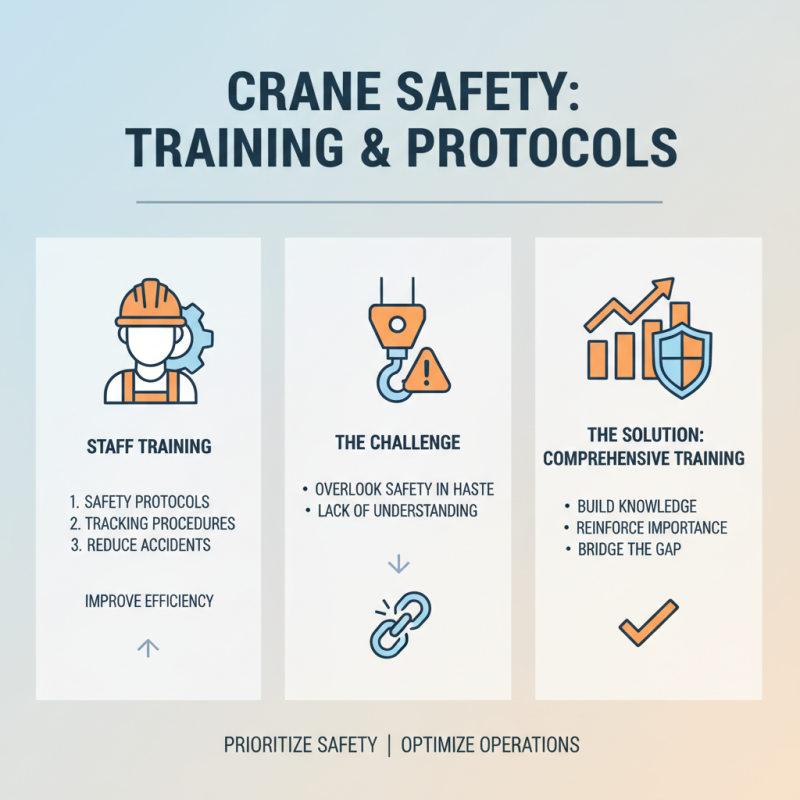
Training staff on safety protocols and tracking procedures is crucial for crane operations. Proper training helps reduce accidents and improve efficiency. Many employees may not grasp the importance of these protocols initially. It’s common for them to overlook safety measures when in a rush. Comprehensive training can bridge this gap.
Hands-on sessions are effective. Trainees benefit from real-life scenarios, like simulating potential hazards. Visual aids, like safety checklists, can reinforce learning. However, the challenge remains that staff may forget critical steps during busy operations. Regular refresher courses can help keep information fresh.
Tracking procedures should complement training. Employees need to understand how to document their actions accurately. Simple tracking tools can simplify this process. Yet, inconsistencies in reporting often occur. Establishing a culture of accountability can encourage better adherence to both protocols and tracking procedures. This approach not only enhances safety but also boosts operational efficiency.
Regularly Reviewing Data for Continuous Improvement
Regularly reviewing data is essential for improving crane operations. Monitoring metrics such as lift times, load weights, and downtime helps identify patterns. These reviews often reveal areas needing improvement. For instance, unexpected delays may point to operator training gaps or equipment issues.
Data review sessions should include various team members. Engaging everyone fosters a culture of safety. Operators can share firsthand experiences while supervisors provide oversight. Occasionally, these sessions uncover issues that management could overlook. It's important to listen to voices from the field.
Despite the benefits, challenges exist. Data integrity may suffer from human error. Inaccurate records can skew results, leading to misguided strategies. Additionally, some may resist change. This reluctance can hinder progress. Therefore, fostering open communication is key to overcoming these barriers. Regular data reviews must be embraced as opportunities for learning.
Crane Operations Performance Metrics
This bar chart illustrates the average operational efficiency and safety incidents of crane operations over six months. The data reflects the number of successful lifts and reported safety incidents.