

Sanghvi Crane

What Is a Wall Mount Server Rack Used For?

A Wall Mount Server Rack is a compact enclosure designed to organize and protect network equipment, servers, patch panels, and related hardware. It mounts directly onto a wall, saving valuable floor space in offices, retail stores, classrooms, and small technical rooms. This practical design can make cables easier to trace and equipment easier to inspect.

Neil Rasmussen, a recognized data-center infrastructure expert and former senior vice president at Schneider Electric, has stated, “The primary purpose of a data center is to house IT equipment.” His observation also applies to smaller installations. A Wall Mount Server Rack gives that equipment a defined, secure, and serviceable home. It can support switches, routers, firewalls, power distribution units, and shallow-depth servers. Lockable doors help restrict casual access. Ventilation openings support airflow, although they do not replace proper cooling planning.

Small footprint.

In real installations, the rack may reduce clutter and shorten cable paths. However, it is not a magic box. Weight limits, wall strength, rack depth, airflow direction, and power capacity must be checked before installation. A crowded enclosure can create heat buildup and make maintenance frustrating. I have seen compact spaces become difficult to service because every cable was added without a layout plan. That weakness deserves attention.

The best choice depends on the equipment, environment, and future expansion needs. A careful installer should leave usable space, label connections, and confirm compatibility. This article explains what a Wall Mount Server Rack is used for, where it performs well, and which practical limitations deserve consideration.
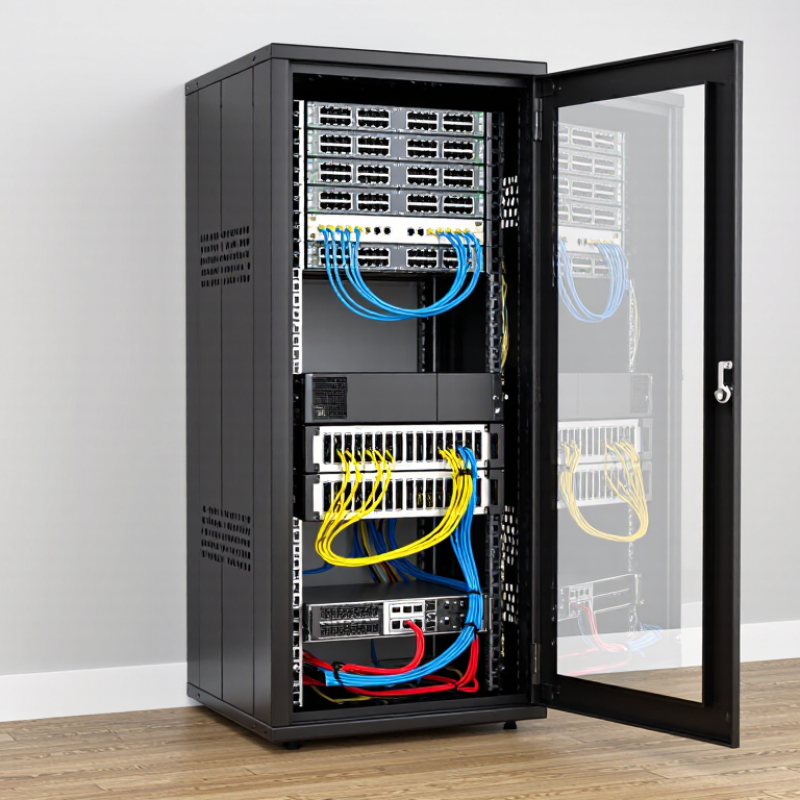
What Is a Wall Mount Server Rack Used For?

What a Wall-Mount Server Rack Is

A wall-mount server rack is a compact enclosure for organizing network and computing equipment. It usually follows the 19-inch rack format and measures capacity in rack units, or U. A 1U device occupies 44.45 millimeters of vertical space. The cabinet attaches directly to a reinforced wall, saving valuable floor area in offices, retail rooms, classrooms, and small server closets.

It is not simply a smaller floor rack. A proper enclosure supports switches, patch panels, routers, power distribution units, and sometimes short-depth servers. Lockable doors help control access, while cable managers prevent sharp bends and accidental disconnections. Ventilation matters. The U.S. Department of Energy and Lawrence Berkeley National Laboratory reported that data centers used about 4.4% of U.S. electricity in 2023. Even a small installation deserves careful airflow planning.

In practice, wall strength and equipment weight are easy to underestimate. I would check the wall structure, cabinet load rating, service clearance, grounding, and rear access before installation. Poor planning creates heat pockets and awkward maintenance. The Uptime Institute’s 2023 Global Data Center Survey reported that 60% of respondents experienced an outage during the previous three years. A wall rack cannot prevent every failure, but organized cabling and protected power connections can reduce avoidable mistakes. It is a practical enclosure, not a complete resilience strategy.

How Its Main Components Organize Equipment

A wall mount server rack keeps network and computing equipment organized in a limited room. It is useful in offices, retail sites, classrooms, and small server closets where floor space is scarce. The enclosure attaches to a wall, so technicians can keep switches, routers, patch panels, and compact servers above the floor.

Its mounting rails provide numbered rack spaces, often called U positions. These rails hold equipment at consistent heights and reduce accidental movement during maintenance. A patch panel places network connections in one visible area. Cable managers guide wires across the cabinet, preventing tight bends and tangled bundles. This detail matters when tracing a faulty connection.

Shelves support equipment without rack ears, such as small appliances or monitoring units. A power distribution unit keeps outlets accessible and separates power cables from data cables. Ventilation panels and cooling fans help remove heat, while grounding points support safer installation. Doors and side panels add physical protection, but they can limit access in narrow spaces. Measure the wall, equipment depth, and total weight before mounting. Field experience shows that overloaded racks become difficult to service and may stress the wall structure. Leave spare rack space when possible. Space disappears quickly.

Which Devices a Wall-Mount Rack Can Hold

A wall-mount server rack organizes compact network equipment in offices, workshops, classrooms, and small equipment rooms. It can hold Ethernet switches, patch panels, routers, firewalls, and cable management bars. Some models also support shallow servers, storage units, and network video recorders. These devices remain off desks and away from accidental contact.

A rack’s depth and weight rating determine what it can safely carry. A short-depth server may fit, while a deeper server could block the rear door or strain the mounting points. A small uninterruptible power supply can support selected equipment, but its heat and weight need careful planning. Leave space around ventilation openings. I have seen crowded racks run hotter than expected. That mistake is easy to make.

Tips: Measure every device before installation. Check rack units, depth, weight, and connector clearance. Place heavier equipment lower when possible. Use labeled patch cables to simplify troubleshooting. Keep power cables separate from data cables when practical. A wall rack is not always suitable for large servers or high-density storage. In those cases, a floor-standing enclosure may provide better airflow and safer expansion. Review the installation after a few weeks, because cable growth often changes the original plan.

Where Wall-Mount Server Racks Are Commonly Used

Where Wall-Mount Server Racks Are Commonly Used

Wall-mount server racks are common in small offices where floor space is limited. They can hold network switches, patch panels, routers, and compact computing equipment near existing cabling. A wall-mounted enclosure keeps hardware off desks and floors, while a lockable door can help limit casual access. It is a practical fit, not a cure-all.

Retail stores often use them in back rooms or communication closets to support point-of-sale terminals, cameras, and wireless access points. Schools and clinics may place racks in small equipment rooms or offices, where several network connections need to stay organized. In warehouses, a rack near a work area can serve local devices without requiring a full server room. Dust, heat, and vibration still matter.

Wall racks also suit branch offices and small service locations that need dependable local networking but have little dedicated IT space. Before installation, staff should check wall strength, rack depth, equipment weight, ventilation, and room for cable bends. Leave access for maintenance. Tight spaces can get awkward fast. A rack that fits the wall may still be difficult to service once cables and equipment are installed, so a little spare room is worth protecting.

How to Match a Rack to Space and Equipment Needs

What Is a Wall Mount Server Rack Used For?

How to Match a Rack to Space and Equipment Needs

Choosing a wall mount server rack starts with measuring the equipment, not the empty wall. Check each device’s depth, height in rack units, and weight. Leave room for power cords and network cables behind the equipment. A rack that fits on paper may still block a doorway or press cables against the wall. Small details matter.

Match the rack’s load rating to the total installed weight, including shelves and accessories. Confirm that the wall and mounting points can safely support that load; get qualified advice if you are unsure. In practice, airflow is easy to overlook. Hot equipment needs clear ventilation, and tightly packed devices may run warmer than expected. Measure door swing and allow space to reach ports and service components. Access counts.

Think about what may be added later. A little spare rack space can prevent a costly replacement, but an oversized rack may consume valuable floor area. Check whether the rack supports the device’s mounting method, and plan cable paths before installation. I have seen tidy setups become awkward once power bricks and patch cables were added. That part is often underestimated. Choose a layout that leaves cables reachable, keeps ventilation unobstructed, and suits the actual room.

What Is a Wall Mount Server Rack Used For? - How to Match a Rack to Space and Equipment Needs
Typical Use Common Equipment Suggested Rack Size Recommended Depth Approximate Load Capacity Key Selection Requirements
Small office network cabinet Network switch, patch panel, router, cable management panel 6U–9U 300–450 mm 30–60 kg Allow at least 20% spare rack space and provide front or side ventilation.
Security camera system Network video recorder, PoE switch, patch panel, power distribution unit 9U–15U 450–600 mm 45–80 kg Confirm the recorder depth, cable bend radius, airflow direction, and heat output.
Small server or edge-computing deployment Short-depth server, network switch, storage appliance, power distribution unit 12U–18U 450–600 mm 60–100 kg Use a reinforced wall structure, adequate ventilation, and a rack with sufficient depth clearance.
Audio-visual and control equipment Audio processor, control unit, signal distribution equipment, shelf-mounted devices 6U–12U 300–450 mm 30–60 kg Check equipment heat generation and reserve space for connectors, cables, and future expansion.
Telecommunications distribution point Fiber enclosure, copper patch panel, network switch, splice tray 9U–18U 300–600 mm 45–90 kg Provide sufficient bend radius for fiber cables and separate power cables from data cabling where practical.
Retail or branch-office equipment Router, switch, firewall appliance, small UPS, patch panel 9U–15U 450–600 mm 50–90 kg Consider lockable doors, compact dimensions, noise control, and protection from unauthorized access.
Industrial or remote edge location Industrial switch, gateway, controller, power supply, monitoring equipment 6U–15U 300–600 mm 40–90 kg Choose a rugged enclosure with secure mounting, suitable environmental protection, and temperature management.
High-density patching and cable management Patch panels, fiber panels, horizontal cable managers, vertical cable organizers 12U–24U 300–600 mm 60–110 kg Prioritize usable rack height, cable access, bend-radius control, and clear labeling space.
UPS-supported network installation Network devices, patch panel, rack-mounted UPS, power distribution unit 12U–18U 450–600 mm 80–130 kg Verify the rack's load rating and wall strength because batteries and UPS units are comparatively heavy.
Space-constrained installation Compact switch, router, patch panel, small power supply 4U–9U 250–400 mm 20–50 kg Measure the available wall area, door swing, cable-entry path, and service clearance before installation.
Scroll to Top