
Sanghvi Crane

How to Choose a Crane on a Crane for Global Projects?

Selecting a crane on a crane for global projects requires more than comparing lifting capacity or purchase price. This configuration can place one crane above another, creating unusual load paths, dynamic forces, and maintenance challenges. It must be treated as an engineered lifting system, not a standard crane package.

The Global Infrastructure Outlook estimates that global infrastructure investment could reach approximately US$94 trillion by 2040. That scale increases demand for adaptable lifting equipment in ports, energy facilities, bridges, and high-rise construction. However, larger projects do not automatically justify more complex equipment. On a congested site, a few metres of clearance can affect the entire selection. Wind exposure, foundation stiffness, counterweight position, hook height, and transport access all matter. Small errors become expensive quickly.

Safety comes first.

The International Labour Organization stresses systematic risk assessment and competent supervision in construction activities. ISO 4301-1 and ISO 9927-1 also provide useful references for crane classification and inspection planning. Local requirements may still differ, so engineers should confirm applicable standards, certification, and operator qualifications before procurement. Deloitte’s Engineering and Construction Industry Outlook highlights continuing pressure from labour shortages, productivity demands, and digital project controls. These pressures support better planning, but technology cannot replace sound engineering judgment. In practice, the best choice balances rated load, duty cycle, weather limits, installation time, service support, and total lifecycle cost. A perfect selection is unlikely. That is why this guide examines the evidence, exposes common assumptions, and explains when a crane on a crane is genuinely practical.
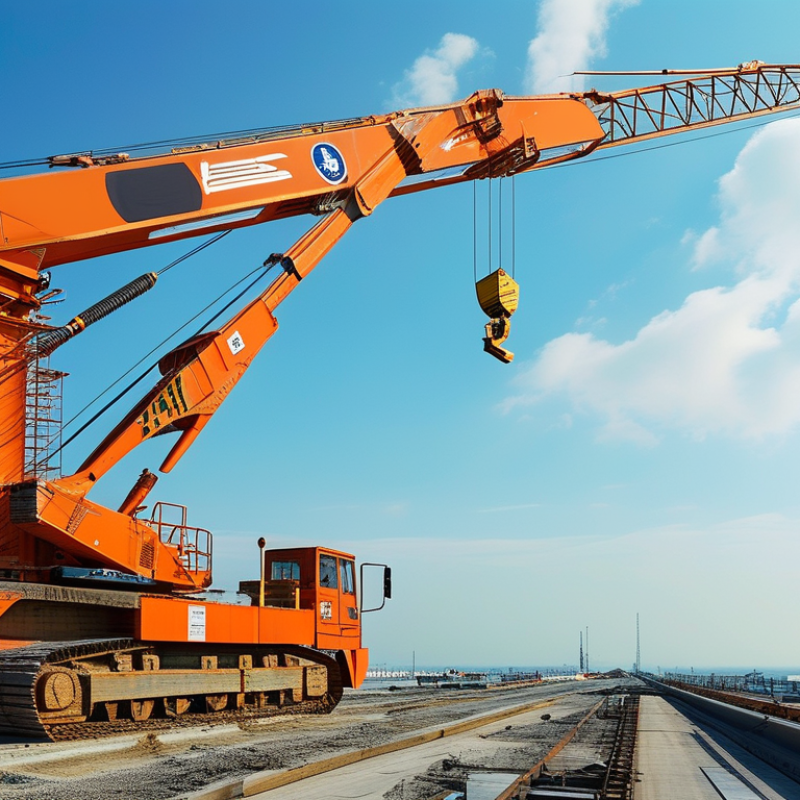
How to Choose a Crane on a Crane for Global Projects?

Define the Project Requirements and Lifting Conditions

How to Choose a Crane on a Crane for Global Projects?

Define the Project Requirements and Lifting Conditions

Start with the load, not the crane catalog. Record the maximum weight, dimensions, center of gravity, lifting points, and required lifting frequency. A 12-ton load may need a much larger crane when the radius reaches 18 meters. Measure the required hook height and clearance around buildings, power lines, scaffolding, and nearby equipment. Small details matter.

Review the complete lifting path. Check ground bearing capacity, slope, access width, overhead restrictions, and available setup space. Soft soil may require steel plates or engineered mats. Strong coastal wind can reduce lifting capacity and increase load swing. Temperature, rain, dust, and altitude can also affect performance. The load chart must match the exact configuration, including boom length, counterweight, attachments, and working radius.

Project teams should document these conditions before requesting quotations. Local engineers can verify structural calculations and site limits. Qualified lifting supervisors should confirm the method statement, inspection records, communication plan, and emergency controls. International projects also require careful review of applicable safety standards and local approval procedures. A neat spreadsheet can still miss a buried drainage line. That mistake is avoidable.

Do not rely on an estimated load or a familiar setup. Recheck measurements after delivery, because the actual site often differs from early drawings. If conditions remain uncertain, pause the lift and obtain a competent engineering assessment. That delay may feel inefficient, but an unsafe assumption costs far more.

Compare Crane Types, Capacities, and Operating Configurations

How to Choose a Crane on a Crane for Global Projects?

Compare Crane Types, Capacities, and Operating Configurations

Crane selection begins with the load path, not the equipment catalogue. A crawler crane suits soft ground and long-duration lifts. Rough-terrain cranes work better on prepared, uneven sites. Truck-mounted cranes offer faster relocation between work areas. Tower cranes provide height and coverage, but require careful foundation planning.

Capacity charts need close reading. Rated capacity changes with radius, boom length, counterweight, and wind speed. A 100-tonne crane may lift far less at 40 metres. Check gross load, rigging weight, ground pressure, and required clearance. Telescopic booms offer flexible setup. Lattice booms may deliver greater reach. Pick-and-carry configurations improve mobility, but they demand strict travel controls.

The Global Wind Energy Council reported 117 gigawatts of new wind capacity in 2023. That growth increases demand for high-capacity lifting near remote sites. The International Labour Organization estimated 2.93 million work-related deaths globally in 2019. These figures make planning more than a cost decision. Verify local regulations, wind limits, inspection duties, and operator qualifications. ISO 4301 classification can help match crane duty to project intensity. Still, a spreadsheet can mislead. If the site survey is incomplete, the selection remains provisional. That uncertainty should be recorded, not hidden.

Evaluate Site Access, Ground Conditions, and Transport Needs

How to Choose a Crane on a Crane for Global Projects?

Evaluate Site Access, Ground Conditions, and Transport Needs

Choosing a crane for an international project begins with the site, not the lifting chart. A compact crane may fit through a narrow gate, yet its counterweight may not. Measure gate widths, turning radii, overhead cables, bridge limits, and nearby structures. Record these details during a physical survey. Satellite images are useful, but they can miss uneven ground and temporary obstructions.

Ground conditions require equal attention. Check soil reports, drainage paths, underground services, and seasonal weather patterns. A machine can meet its rated capacity and still become unstable on weak soil. Use certified ground-bearing calculations and specify suitable mats or engineered platforms. Keep clear records. Small assumptions can create serious delays. A neat plan can still fail.

Transport planning often decides the practical crane choice. Compare road dimensions, axle limits, port handling, assembly space, and local traffic restrictions. Break the crane into legal, manageable loads where required. Confirm customs documents, lifting permits, escort needs, and qualified local operators before shipment. Transport routes may include low bridges, steep grades, or roads that flood after heavy rain. I have learned that a shorter route is not always safer. Recheck every measurement with the carrier and site engineer. Some decisions remain uncertain until the machine reaches the project area.

How to Choose a Crane for Global Projects?

Evaluate site access, ground conditions, lifting requirements, and international transport needs before selecting the crane configuration.
Project Scenario Site Access Ground Conditions Typical Lift Requirement Transport Considerations Recommended Crane Type Main Risk Level Selection Priority
Dense Urban Construction Site Restricted gates, narrow streets, overhead utilities, and limited space for counterweights or outriggers. A practical planning width is often 3.0–3.5 m for site entry, subject to local road limits. Pavement or compacted fill may support traffic, but outrigger reactions can be much higher than normal wheel loads. A verified bearing-capacity assessment is required. Building materials and structural components commonly require 10–80 t capacity, with lifting radius often more important than maximum rated capacity. Use modular transport, removable counterweights, and route surveys covering bridge limits, turning radii, and road restrictions. Compact mobile crane, city crane, or crawler crane with reduced tail-swing configuration. High Verify clearance envelope, outrigger layout, ground pressure, and traffic-management requirements first.
Remote Infrastructure Project Long unpaved access roads, steep gradients, temporary bridges, and limited maintenance facilities. Access may depend on seasonal weather and road reinforcement. Variable soil strength, soft shoulders, erosion risk, and possible saturated or frozen ground. Temporary crane mats or engineered working platforms may be necessary. Repetitive lifts of pipes, bridge sections, towers, or equipment typically ranging from 20–150 t. Select equipment that can be separated into road-legal modules and transported with locally available heavy-haul vehicles. All-terrain mobile crane for improved mobility, or crawler crane where ground preparation and repeated lifting justify assembly time. High Match crane axle loads and transport mass to the weakest bridge, culvert, and road section—not the average route condition.
Port, Shipyard, or Coastal Facility Generally good access, but movement can be limited by quay edges, rail tracks, cargo traffic, and restricted operating zones. Quays may use reinforced concrete, reclaimed fill, or piles. Edge distances and slab load limits must be checked before positioning outriggers. Containerized equipment, marine modules, and steel assemblies may require 50–300 t or more at substantial radius. Sea freight can reduce long-distance road transport, but crane components may need corrosion protection, lifting points, and specialized packing. Crawler crane for heavy repetitive lifts, or heavy mobile crane where rapid relocation is essential. Medium–High Confirm quay load capacity, wind limits, tidal exposure, and exclusion zones around water before final selection.
Wind Farm or Energy Corridor Access roads may include tight bends, steep grades, soft verges, and temporary widening areas. Long component transport often determines the route design. Crane pads require engineered compaction and drainage. Wind-sensitive lifting operations may need additional stabilization and weather monitoring. Major components can require 80–600 t capacity depending on component mass, hub height, and lift radius. Blade, tower, and nacelle transport may require route clearance studies, bridge checks, police coordination, and abnormal-load permits. Crawler crane for high-capacity assembly, or large all-terrain crane where mobility between foundations is critical. High Check lift radius, boom configuration, wind-speed limits, pad dimensions, and relocation time together.
Industrial Plant Shutdown Existing pipe racks, buildings, cable trays, and operating units may create narrow access corridors and restricted boom paths. Concrete slabs, underground services, basements, and buried tanks can limit outrigger positions and ground loading. Heat exchangers, motors, vessels, and process modules commonly require 30–250 t capacity with precise placement. Delivery must be synchronized with shutdown windows, plant permits, escort requirements, and limited laydown space. Telescopic mobile crane for flexibility, or compact crawler crane for low-impact movement inside the facility. High Prioritize lift studies, underground-utility surveys, exclusion zones, and exact setup geometry.
Bridge and Highway Construction Access may be available from both road and water, but traffic lanes, median barriers, and work-zone limits can restrict setup. Existing pavement may not be designed for concentrated outrigger loads. Embankments and recently placed fill require separate stability checks. Precast beams and bridge elements often range from 20–150 t, with tandem lifting sometimes required. Transport planning must account for lane closures, bridge clearance, legal axle weights, and delivery sequencing. Mobile crane for short-duration lifts, or crawler crane for repeated beam placement along the alignment. Medium–High Confirm road closure duration, setup footprint, tandem-lift controls, and maximum ground pressure.
High-Rise Building Project Site footprint is usually restricted, with limited storage, nearby structures, and possible tower-crane interference. Foundations, basement slabs, and engineered working platforms may have strict point-load limits. Steel, formwork, concrete skips, and mechanical equipment may require 5–80 t, while reach and duty cycle are critical. Components may need staged deliveries, night transport, or partial assembly because storage and lifting windows are limited. Tower crane for continuous vertical construction, supported by mobile or crawler cranes for erection and dismantling. Medium–High Compare maximum radius, available foundation capacity, tie-in requirements, dismantling method, and site logistics.
Cross-Border Emergency or Short-Term Work Site conditions may be uncertain, with incomplete surveys, temporary access, and limited local lifting infrastructure. Ground investigation may be basic; use conservative assumptions until bearing capacity, slope stability, and underground hazards are verified. Typical requirements vary widely, often between 10–100 t, with speed of deployment more important than maximum capacity. Favor road-legal equipment, common transport modules, multilingual documentation, and parts support available in the destination country. Self-propelled mobile crane or all-terrain crane with rapid setup and minimal auxiliary equipment. High Balance mobilization time, local regulations, operator qualifications, spare parts, and verified lifting capacity.
Planning note: The capacity ranges are indicative early-stage planning values, not lifting approval limits. Final crane selection should be based on a certified load chart, maximum radius, boom and jib configuration, wind restrictions, ground-bearing calculations, transport permits, local regulations, and a project-specific lift plan.

Check Global Safety Standards, Regulations, and Certifications

How to Choose a Crane on a Crane for Global Projects?

Safety compliance should guide crane selection before lifting capacity or purchase price. A crane may satisfy one country’s rules and still fail another’s requirements. Check ISO 9927 inspection guidance, ISO 12480-1 safe-use practices, and local standards such as EN 13001 or ASME B30.5. These standards address design, operation, stability, inspection, and maintenance.

The International Labour Organization estimates 2.93 million workers die annually from work-related causes. Its 2023 report shows why documented risk control matters across international projects. However, broad workplace statistics do not prove crane safety directly. That limitation deserves attention. Request structural calculations, fatigue records, load-test results, emergency procedures, and maintenance histories. Confirm whether an accredited body issued the inspection certificate. Also verify operator training, site authorization, and equipment registration in the destination country. A certificate is evidence, not a guarantee.

Tips: Build a country-by-country compliance checklist before shipment. Match each document to the exact crane configuration. Check rated capacity at the planned radius, height, wind speed, and ground condition. Ask for serial-number consistency across plates, manuals, and certificates. Small mismatches can delay customs clearance or site approval.

A practical review should include an independent engineer and a local lifting specialist. They can identify differences between imported documentation and actual site conditions. Recheck requirements after design changes, relocation, or major repairs. Global rules evolve, and project teams sometimes assume yesterday’s approval still applies. That assumption can be expensive.

Assess Total Costs, Suppliers, Maintenance, and Local Support

When selecting a crane-on-crane setup for global work, look beyond the purchase price. Calculate transport, installation, training, insurance, fuel, permits, and expected downtime. A low-cost unit can become expensive after ocean freight and remote commissioning. I once underestimated inland delivery costs by focusing too closely on the equipment quotation.

Ask suppliers for verified load charts, inspection records, engineering calculations, and references from similar environments. Their answers should be clear and technically consistent. Check whether the proposed crane suits local wind, humidity, dust, temperature, and ground conditions. A supplier offering fast advice is useful, but documented experience matters more. Request realistic delivery dates, spare-parts pricing, and warranty terms before signing.

Maintenance planning should begin before shipment. Identify wear parts, service intervals, lifting accessories, and diagnostic tools. Confirm whether trained technicians are available near the project site. Response time matters. A delayed hydraulic seal can stop an entire installation team. Local support should include language capability, emergency communication, and practical knowledge of regional transport conditions. However, support promises may sound better than they perform. Test them with detailed questions and a small pre-sale service request. That extra check can reveal gaps early.

Scroll to Top