How to Choose the Largest Crane for Your Project?
Choosing the largest crane for your project is not a simple competition of lifting capacity. It is a controlled engineering decision involving load weight, working radius, height, ground conditions, wind, transport access, and local regulations. A crane rated for 1,000 tonnes may become unsuitable when the load moves beyond its charted radius. Small planning errors can create large delays.
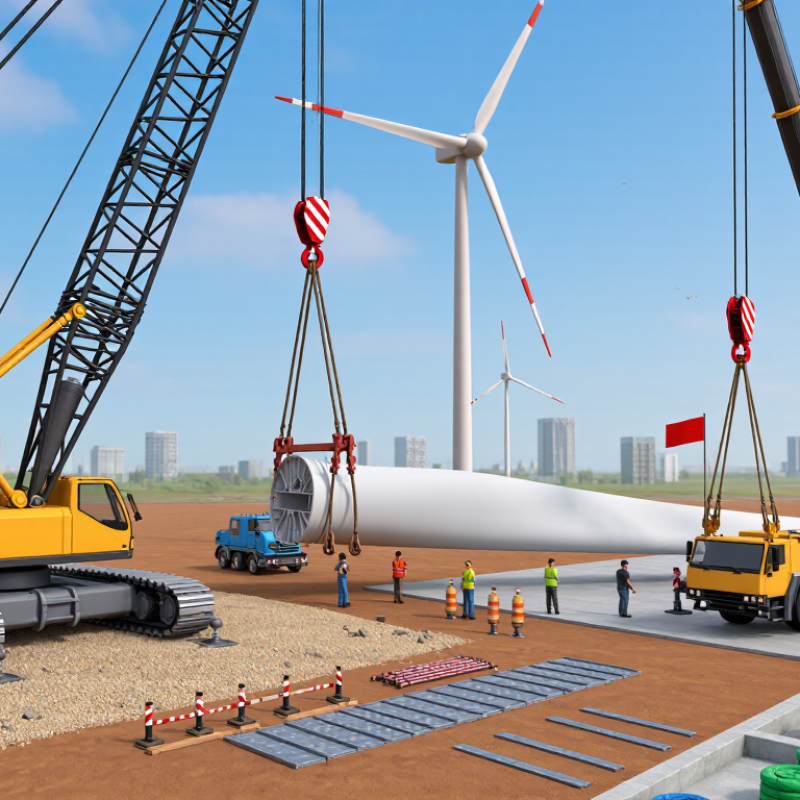
Industry demand is also changing. The Global Wind Energy Council’s Global Wind Report 2024 recorded 117 GW of new wind capacity installed worldwide in 2023. Larger turbines require longer booms, heavier counterweights, and more complex lifting plans. The ICST Top 100 2024 ranking also demonstrates the continuing growth of high-capacity mobile and crawler cranes. These reports show market direction, not a universal answer. The largest crane is only useful when its complete configuration matches the site.
A practical selection process starts with verified load data and a realistic lift radius. Review the manufacturer’s load chart, not just the headline capacity. Check axle loads, assembly space, soil bearing pressure, overhead restrictions, and wind limits. A crawler crane may offer excellent stability, while a mobile crane may reduce setup time. Neither option is automatically better. This guide will examine capacity, reach, mobility, safety planning, and total project cost. It will also question a common assumption: bigger is always safer. It is not. A smaller crane, positioned correctly, can sometimes deliver a more reliable lift. Final decisions should be reviewed by qualified lifting professionals and supported by a documented lift plan.
Define Lift Requirements: Load, Radius, Height, and Duty Cycle
How to Choose the Largest Crane for Your Project?
The largest crane is not always the safest or most efficient choice. Define the lift requirements before reviewing crane capacity. Record the load’s gross weight, including rigging, spreader beams, fuel, and attachments. A 20-ton load can exceed chart capacity quickly. The reason is radius. At a 30-meter radius, the same crane may lift far less than it can near its centerline. Height also matters. Boom length, reeving, wind exposure, and landing clearance can change the selection. Measure the real site, not only the design drawing.
Duty cycle deserves equal attention. ISO 4301-1 classifies cranes by working cycles and load spectrum, while ASME B30.5 provides widely used mobile-crane safety guidance. A crane lifting once daily faces different stress from one moving loads every few minutes. The International Labour Organization estimates that construction represents 30–40% of global occupational fatalities. That figure makes disciplined planning more than paperwork. It is risk control.
Ask for a current load chart and verify every configuration. Check counterweight, outrigger spread, ground bearing pressure, and allowable wind speed. OSHA’s 29 CFR 1926 Subpart CC requires capacity information and safe operating controls for construction cranes. Still, charts do not know your muddy access road or uneven slab. Guesswork fails. I have seen projects choose capacity first, then discover the crane cannot physically reach the set point. That is an expensive mistake. Recheck the radius with the heaviest lift, the worst position, and the least favorable ground condition.
Check Ground Bearing Pressure and Outrigger Loads in kPa
How to Choose the Largest Crane for Your Project?
Check Ground Bearing Pressure and Outrigger Loads in kPa
Choosing the largest crane is not only about lifting capacity. Ground conditions often set the real limit. Start with the heaviest planned load and its working radius. Record the boom length, lifting height, and expected load position. Then review the crane’s maximum outrigger reactions. These figures can matter more than the crane’s rated capacity.
Ground bearing pressure equals outrigger reaction divided by effective support area. For example, a 420 kN reaction over 2.0 square metres creates 210 kPa. Small area, high pressure. Compare this result with verified allowable soil pressure. Outrigger mats spread loads, but they cannot repair weak or disturbed ground. Check mat stiffness, thickness, contact area, and level support. Wet fill, trenches, basements, and hidden services may change the calculation. A qualified geotechnical engineer should confirm the soil assumptions.
On one project, my early estimate looked acceptable. Later, a site inspection found a buried void near one outrigger. The original calculation had missed it. That mistake was avoidable. Include wind, dynamic effects, and uneven load distribution in the assessment. Use the highest expected outrigger load, not an average value. If the figures remain uncertain, increase the support area or revise the lift plan. Sometimes a smaller crane with lower outrigger loads suits the ground better. Recheck the pressure after heavy rain or site changes.
How to Choose the Largest Crane for Your Project?
Compare nominal crane capacity with maximum outrigger reaction and estimated ground bearing pressure. The crane should be selected only after confirming the lift plan, soil investigation, outrigger configuration, and manufacturer load chart.
The values shown are representative planning figures for common all-terrain and mobile crane capacity classes, not company or brand ratings. Ground bearing pressure is expressed in kPa, where 1 kPa equals 1 kN/m². Actual outrigger loads can vary with boom length, radius, counterweight, lifted load, wind, uneven terrain, and outrigger pad size. A qualified engineer should verify the final setup.
Evaluate Wind Limits, Boom Length, and Hook Height in Metres
How to Choose the Largest Crane for Your Project?
Choosing the largest crane is not simply a matter of selecting the highest capacity. Wind limits, boom length, and hook height in metres can change the entire lifting plan. Begin with a site survey that records typical wind conditions, nearby buildings, ground exposure, and open working space. An anemometer can provide useful readings, but one afternoon of data is not enough. Wind changes quickly.
Check the crane’s rated wind limit for the planned lift, not only its maximum operating figure. A long boom catches more wind and may reduce lifting capacity. The load can also swing when gusts pass across the site. Keep the hook height in metres clearly documented, including the load height and the required clearance above structures. A lift requiring 32 metres of hook height may need more boom than a simple capacity chart suggests.
Match boom length to the working radius and the load’s final position. A crane may lift 20 tonnes near its base but far less at a 40-metre radius. Review the load chart with a qualified lift planner, then verify ground bearing pressure and setup space. A neat calculation can still be wrong if the measured radius is inaccurate. Measure twice. Leave practical room for wind changes, rigging movement, and operator visibility.
Select Cranes Meeting ASME B30.5 and EN 13000 Safety Standards
How to Choose the Largest Crane for Your Project?
The largest crane is not automatically the safest choice. Selection begins with the heaviest load, working radius, lift height, and duty cycle. Add the weight of slings, spreader beams, hooks, and temporary attachments. A small omission can change the required capacity. Field planning should also verify ground bearing pressure, underground services, wind exposure, and access for assembly.
Safety standards deserve equal attention. ASME B30.5 covers mobile and locomotive crane construction, inspection, testing, operation, and maintenance. EN 13000 addresses mobile crane design, stability, machinery safety, controls, and technical information. Request current compliance documents, load charts, inspection records, and operating manuals. Check that the selected configuration matches the actual boom length and counterweight arrangement. A certificate alone proves little if the setup is different.
The International Labour Organization estimated 2.93 million work-related deaths worldwide in 2019, showing why disciplined planning matters. Use the manufacturer’s load chart only within its stated limits. Confirm wind restrictions, outrigger reactions, lifting paths, and communication procedures with qualified engineers and operators. Leave a practical safety margin, not an optimistic one. Conditions change. A crane that passes the calculation may still be unsuitable after rain softens the ground or wind increases. This is where reviews can become imperfect: site data is often incomplete, and assumptions need challenging before lifting begins.